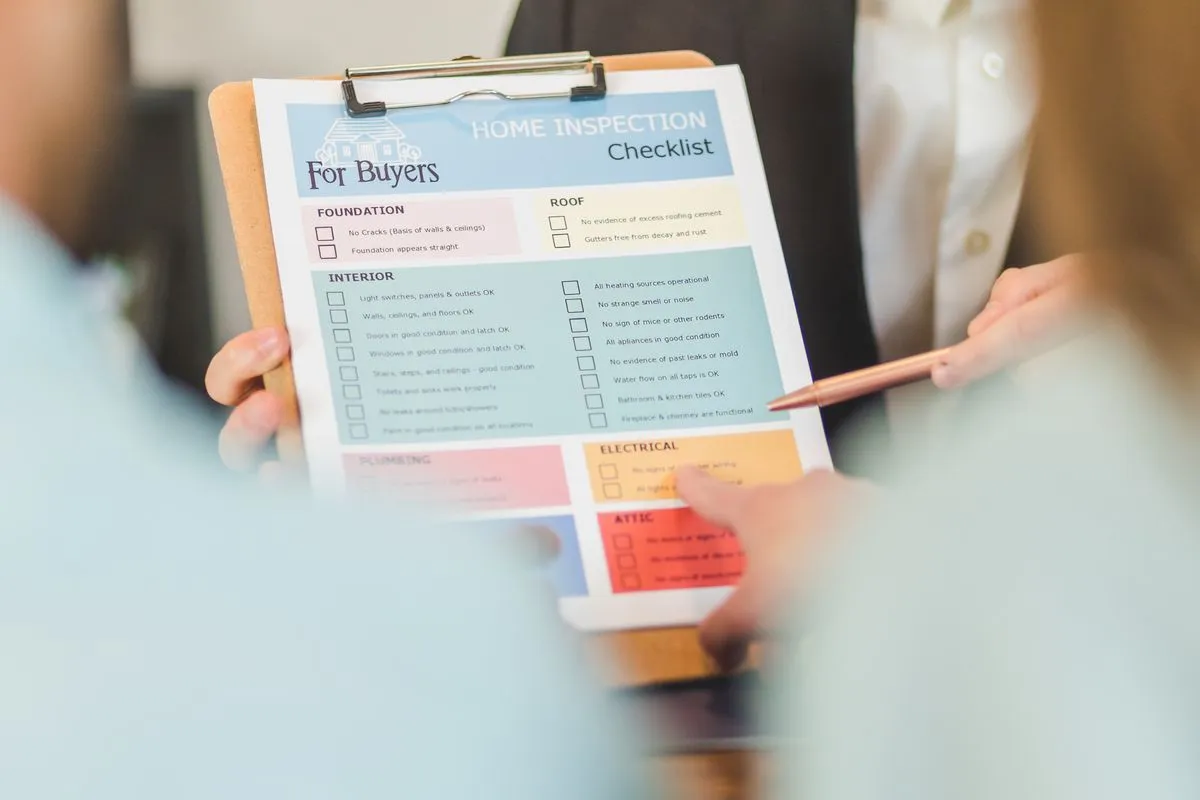
The classement meublé de tourisme is France's optional 1 to 5 star rating for holiday rentals, granted after an on-site inspection and valid for 5 years. This guide explains who inspects, what the 133-criterion grid checks, the steps, the cost and the tax effects in 2026: the micro-BIC allowance after the loi Le Meur and tourist tax by star category. Rules checked on 9 October 2026.
A welcome guide ready for the inspector
Sign up free. Build a digital welcome guide with your house information, equipment and local tips, share it by link or QR code and translate it into 9 languages. Welcome guide only from €2 / $3 per property per month, first month free.
Start freeThe classement of a meublé de tourisme is France’s official star rating for holiday rentals: an optional rating from 1 to 5 stars, granted after an on-site inspection by an accredited or approved body against a national grid of 133 criteria. The owner pays for the visit and the rating lasts 5 years. In 2026 its main payoff is fiscal: under the micro-BIC regime, a classified rental gets a 50% allowance on receipts up to €77,700 for 2025 income (€83,600 for 2026 income), against 30% up to €15,000 for an unclassified one, and its guests pay tourist tax at a fixed rate per star instead of a percentage of the price.
Rules checked on 9 October 2026, for owners in France and abroad.
This article explains French rules for owners. It is not tax or legal advice: check your own situation with the tax office or an accountant.
It is a quality rating set by the French Tourism Code. A meublé de tourisme (a villa, apartment or studio let furnished, for the guest’s exclusive use, by the night, week or month) can be rated in 5 categories, from 1 to 5 stars. The process is voluntary and paid, and the decision is valid for 5 years (service-public.fr, checked 21 May 2026). Once classified, you must display the decision visibly inside the rental, and may use the official star sign and logo in your listings.
Classification does not replace the town-hall declaration, which is compulsory whether or not you are classified: always for a second home, and for a main residence where the commune runs registration. See the registration number and the national portal.
You choose the inspection body yourself, from two official lists that Atout France publishes on its meublé de tourisme page:
Atout France only publishes the lists: the body that visits proposes the decision. If no body operates in your département, you can hire one from elsewhere: they all apply the same national grid.
The grid comes from the arrêté of 2 August 2010, whose annex was replaced by the arrêté of 24 November 2021 for visits made since 1 February 2022. Légifrance shows no later change. Its 133 criteria fall into three chapters:
Each criterion is worth points, and its status depends on the category you ask for: mandatory, optional (à la carte) or not applicable. A one-room rental for one or two people must first meet a prerequisite: 9 m² with a separate kitchen, or 12 m² with a kitchenette. Five criteria on cleanliness and condition (bathroom, floors and walls, furniture, bedding, kitchen) are mandatory and cannot be offset.
According to Atout France’s inspection guide, a rental reaches a category when it:
The higher the category, the more becomes mandatory. A few examples from the grid: Wi-Fi is mandatory from 2 stars (unless there is no coverage), a welcome booklet from 3 stars, and a website or web page dedicated to the property, also in a foreign language, at 4 and 5 stars (booking platforms do not count). At every level you need local and tourist information in French and in at least one foreign language, one energy-saving and one water-saving measure, and information that helps guests respect the environment during their stay.

Count on about six weeks at most from the visit to a final decision, plus the wait for an appointment. After 5 years the rating expires, so book the renewal visit early if you want to keep the tax treatment without a gap.
There is no regulated price: each body sets its own rates, which can depend on the size of the property. As one published example, the Saint-Tropez tourist office’s 2026 brochure lists €190 for a home under 50 m², rising to €450 above 200 m², and €100 for a second visit if one is needed. Compare several bodies, ask whether a second visit is charged, and budget for any work the grid requires.
Since the loi Le Meur of 19 November 2024, the gap is smaller but still large (service-public.fr, 27 July 2026; impots.gouv.fr):
On €12,000 of receipts, a classified rental is taxed on €6,000 and an unclassified one on €8,400. Above €15,000, the difference is bigger: an unclassified rental moves to the régime réel (actual expenses, accounts, often an accountant; the switch is assessed over two consecutive years), while a classified one can stay under micro-BIC up to its ceiling. The extra 21% allowance that the 2024 finance law had created for classified rentals outside high-demand areas does not appear in the rules for 2025 and 2026 income.
Under the régime réel, where you deduct actual costs and depreciation, the star rating does not change your income tax; the open question there is depreciation, which the 2027 budget bill proposes to cap.
Guests pay the tourist tax, but it adds to their total price. Where the commune levies it, a classified rental charges a fixed amount per person per night, chosen by the commune within a national scale. For 2026 (entreprendre.service-public.fr):
An unclassified rental charges a percentage set by the commune, between 1% and 5% of the nightly price per person excluding taxes, capped at the highest rate the commune has adopted. Regional or departmental surcharges can apply on top, such as 200% in Île-de-France. At 5%, a €200 night for 4 guests means €2.50 per person per night. Because the percentage grows with your price and the fixed rate does not, classification matters most for higher-priced rentals. Airbnb applies the unclassified percentage until you choose your classification category in the listing’s Regulations tab, so update it as soon as the decision arrives.
In rural revitalisation areas (ZFRR), communes can vote to exempt classified meublés de tourisme from property tax (taxe foncière) and council tax (taxe d’habitation); the exemption is requested from the tax office (more in local taxes on a French holiday rental). Classification also lets you join the ANCV scheme and accept Chèques-Vacances holiday vouchers.
Not for energy: a star rating does not replace the energy performance diagnosis (DPE). In cities that require a change-of-use authorization, the application needs a DPE rated A to E in mainland France, A to D from 2034, and the commune will be able to ask for the DPE of existing rentals (service-public.fr F2043).
For registration, the classification is part of what you declare: the town-hall declaration asks for the date and level of the classification decision, and any change means a new declaration. The national registration service, announced for the fourth quarter of 2026, will make registration compulsory in every commune: keep your declared details, classification included, up to date there too. The full list is in every owner obligation in 2026.
Several criteria are about the information you give guests, and a digital welcome guide can carry it. Atout France’s inspection guide accepts a welcome booklet on paper or in digital form (QR code, tablet, link, website). It must at least give the manager’s contact details, emergency numbers and how the rental works (door codes, Wi-Fi), and be bilingual from 3 stars. Local tourist information can be digital too, in French and at least one foreign language. Nowistay’s welcome guide holds your house information, equipment instructions and local tips, is shared by link or QR code and translates automatically into 9 languages (how to translate your welcome guide). It can also carry your eco-friendly tips and accessibility information. The inspector still judges each criterion on site, so check the exact requirements before the visit.
For direct bookings, you set the tourist tax per property: a fixed amount per guest per night once classified, or a percentage per guest per night with a cap per person while unclassified, with an optional children exemption and a limit on taxed nights. It is added to the total guests see on your booking page and recorded as the booking’s tourist tax, on the booking and the guest invoice (set up direct booking). When your stars come through, switch the rule from a percentage to a fixed rate. For the platform side, read how to collect and automate tourist tax.
Prices are not regulated: each accredited or approved body sets its own rates, which can depend on the size of the property. As one published example, the Saint-Tropez tourist office's 2026 rates go from 190 euros under 50 m² to 450 euros above 200 m², plus 100 euros for a second visit if needed. The fee comes back every 5 years with the renewal.
Five years from the decision. After that the rating expires and the rental is treated as unclassified, for income tax and tourist tax, until a new visit renews it.
An inspection body of your choice from the two lists published by Atout France: bodies accredited by COFRAC, and approved bodies such as tourist offices, departmental tourism agencies, label networks and private firms. You can use a body from another département: all apply the same national grid.
50% on receipts up to 83,600 euros for 2026 income, declared in 2027, and up to 77,700 euros for 2025 income. An unclassified meublé de tourisme gets 30% up to 15,000 euros for both years.
Yes. You have 15 days from receiving the visit certificate to refuse the proposed classification. Without a refusal, the classification is acquired and valid for 5 years.
Yes. Atout France's inspection guide accepts a welcome booklet on paper or in digital form, such as a QR code, tablet, link or website. It must give at least the manager's contact details, emergency numbers and how the rental works, and be bilingual from 3 stars, where it becomes mandatory.
Yes. Classification does not replace the declaration: a second home must always be declared, and a main residence wherever the commune runs registration. The declaration asks for the date and level of the classification decision, and a change means a new declaration.
Tourist tax on direct bookings, per property
Sign up free. Set the tourist tax for each property, as a fixed rate per guest once classified or a capped percentage while unclassified, and take direct bookings with Stripe and 0% Nowistay commission. From €12 / $15 per property per month, first month free.
Try Nowistay free

Over 25 years of experience in real estate investing and a recognized expert in short-term rental automation. Bassel helps property managers increase revenue, cut operating costs, and deliver 5-star guest experiences using AI-powered tools he built from firsthand hosting experience.