France Short-Term Rental Registration Number: National Portal (2026)

As of 8 October 2026, France's national registration portal for meublés de tourisme is not open; the government announces it for the fourth quarter of 2026, and until then you follow your commune's procedure. This guide explains who needs a number, how the national declaration will work, where to display it on Airbnb and Booking.com, and the fines.
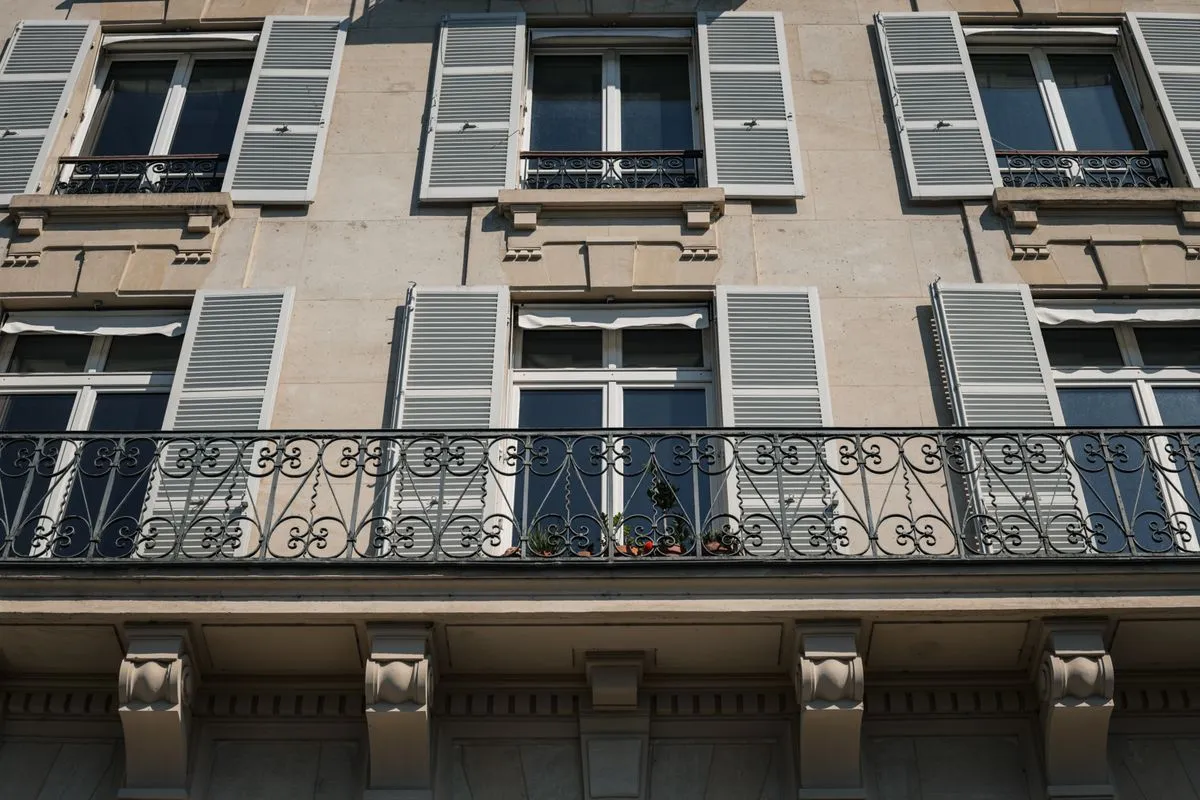
Parisian apartment building with grey shutters and wrought-iron balconies, the kind of home that needs a registration number to be rented to tourists

Every property and every night in one place

Sign up free. Nowistay PMS keeps each property's details and its Airbnb, Booking.com, Vrbo and Expedia bookings in one calendar, so the nights you rent each year are easy to check. From €12 / $15 per property per month, first month free.

Start free

A registration number is the identifier a French furnished holiday let (meublé de tourisme) receives when it is declared, and it must appear in every listing. The Le Meur law (loi n° 2024-1039 of 19 November 2024) moves this declaration to a single national online service for every meublé de tourisme in France, main residences included, at the latest by 20 May 2026. As of 8 October 2026, that national portal is not open: the government announces it for the fourth quarter of 2026. Until it opens, you keep declaring with your town hall, through its own online service where it has one.

Facts checked on 8 October 2026 on Légifrance, Service-Public and the website of the Direction générale des entreprises (DGE). Dates can still move, so check the official pages before you declare. This article is general information, not legal advice.

It is the number your town hall (and soon the national portal) gives you when you declare a furnished home rented to tourists for short stays. Today, communes that have set up the “declaration with registration” procedure issue it immediately. Under article D324-1-1 of the French tourism code, it has 13 characters in three groups: the commune’s 5-digit official geographic code, a 6-digit identifier set by the commune and a 2-character check key. Paris and many large or tourist cities use this procedure.

In communes without it, a second home is declared with a simple form (cerfa n° 14004) and no number is issued, while a main residence usually needs no declaration at all. The national portal is meant to end this patchwork: one procedure and one number per property, everywhere in France. It is one of the measures of the Le Meur law, which our overview of the anti-Airbnb law covers in full.

Is the national portal open in October 2026?

No. Here is where things stand on 8 October 2026:

  • The law is written. Article L324-1-1 of the tourism code, in the version Légifrance shows as in force since 20 May 2026, says that anyone offering a meublé de tourisme must first declare it to a national online service, which sends “without delay” an electronic acknowledgement containing the declaration number (article L324-1-1 on Légifrance).
  • The portal is not live. The DGE page on the scheme (API meublés, updated 23 July 2026) says the national registration service will launch in the fourth quarter of 2026. Service-Public’s news item of 27 July 2026 gives the same timing. No opening day and no web address have been published.
  • How it will work. A form on the government’s Démarche Numérique platform, reached from a public page of the DGE website. The number will be issued automatically, and the commune can then check it, suspend it or withdraw it.
  • What to do meanwhile. The DGE’s instruction is clear: until the national service opens, your obligations are those that apply in your commune today. If your commune runs a registration procedure, keep using it.

Two traps to avoid. Owners cannot sign up to API meublés: it is the data platform for communes and rental platforms, not a declaration form. And some websites present a commune declaration service or a private site as “the national portal”. Neither is.

Who will need a number: main residence or second home?

Once the portal opens, every meublé de tourisme in every commune needs its own number, classified or not. What changes depends on the property.
Your main residence (résidence principale)

  • Today, in most communes, there is nothing to declare. In communes with registration, you already need a number.
  • With the national portal, you will declare it like any other property, state that it is your main residence and prove it. The law allows the implementing decree to require an income tax notice in your name showing the property’s address, and the DGE expects an ID document and that tax notice.
  • You can rent it for up to 120 days per calendar year, except for professional obligations, health reasons or force majeure. A commune can lower the cap by a reasoned decision, but not below 90 days.

A second home or a dedicated rental

  • Today: a cerfa n° 14004 declaration to the mayor, or the commune’s online registration service where it exists.
  • With the national portal: a declaration on the portal, then a new number to put on every listing.
  • Separately, some cities also require a change-of-use authorisation (changement d’usage) before a home becomes a holiday let. The number does not replace it. Our checklist of French owner obligations lists what else applies, from tourist tax to income declaration.
Wooden house model, keys and a printed form on a table, standing for the declaration of a holiday rental before it is listed
Declare first, then list: the number goes on every advert of the property.

How do you get the number, step by step?

  1. Find your commune’s procedure. The town hall website says whether registration applies, where its online service is and, for main residences, the local day cap.
  2. Gather the information. Communes ask today for your identity, postal and email address; the property address with building, staircase, floor and flat number; whether it is your main residence; the number of rooms and beds; and, if the property is classified, the date and level of the classification decision. Expect the national form to ask for the same, plus supporting documents: the DGE says the list is still being finalised.
  3. Declare. On a commune online service, the number is issued at once. For a simple declaration, send cerfa n° 14004 to the mayor; Service-Public indicates registered mail with acknowledgement of receipt.
  4. Display the number everywhere you advertise (see the next section). In a co-ownership building, also give it to the managing agent (syndic) as soon as you have it.
  5. When the national portal opens, declare again. Holders of a commune number will have “several months” to renew on the national service; after that transition, all old numbers become invalid. According to the DGE, the new number will combine a fixed part (FRA plus the commune’s INSEE code) and a random part; the final format is still being set.

If you own in several countries, our guide on registering a vacation rental in France, Italy, Spain and the UK compares the procedures.

Where do you put the number on Airbnb and Booking.com?

French law says every rental offer must carry the number, and platforms must publish it in every listing of the property. Before putting a listing online, they must also collect your sworn statement saying whether the home is your main residence, with its number (article L324-2-1 of the tourism code).

  • Airbnb: the listing editor has a registration field. Its label has changed over time, so look for “registration” or local laws in your listing settings.
  • Booking.com, Vrbo/Abritel and Expedia: EU Regulation 2024/1028, applicable since 20 May 2026, requires platforms to ask hosts whether a registration procedure applies and to show the number in the listing. Look for the licence or registration field in your property settings.
  • Your own channels: direct booking website, social media posts, classified ads. They are rental offers too.

One property, one number: if you rent two flats in the same building, each one gets its own.

What if your situation changes, and do you need to renew?

The law asks you to update the declaration whenever the information or documents you gave change, and to renew it when a period set by decree expires. As of 8 October 2026, we found no published decree setting that renewal period, so nobody can say yet how long a national number will last. Typical changes that call for an update: the home stops being your main residence, you add beds, it gets classified, or ownership changes. The mayor can also suspend a number when the home is under a safety or unfit-housing order, and ask platforms to take the listing down.

What are the penalties?

Article L324-1-1, in its version in force since 20 May 2026 (checked on Légifrance on 8 October 2026), sets these maximums:

  • €10,000 administrative fine, imposed by the commune, for not meeting the declaration obligations.
  • €20,000 for a false declaration or a fake number.
  • €15,000 civil fine for renting a declared main residence beyond 120 days, or beyond the lower local cap.

Platforms face their own fines under article L324-2-1: up to €12,500 per property when they fail their information, sworn statement and display duties, and up to €50,000 per listing when they keep offering a main residence past the cap. You may still see older, lower amounts in some guides: the code text is the reference.

What do platforms do with your number?

  • Refuse or flag listings without a number where registration applies. Under the EU regulation they should not publish such offers, and they run random checks on the numbers they display.
  • Remove listings on request. Authorities can order the removal of listings with a missing, invalid or misused number, for example one number used for two homes.
  • Report your nights. Platforms send activity data per listing (number, address, nights booked) to the government’s central data point, which communes can consult on request. Once a main residence has used up its yearly cap, the platform must stop offering it, and the commune is told when a main residence goes over the cap.

How Nowistay helps you prepare the declaration

Nowistay does not declare for you: the law asks the person renting out the home to make the declaration. What it does is keep the information the form asks for, and the nights you must watch, in one place.

  • One record per property. Nowistay PMS holds each property’s address, type and capacity, with bookings from Airbnb, Booking.com, Vrbo, Expedia and your direct booking page synced in real time in one calendar.
  • Nights booked, across every channel. For a main residence, the 120-day cap counts all platforms together. You can export a property’s bookings as a CSV file, with check-in and check-out dates and the booking source, and add up the nights of the calendar year.
  • Ask ChatGPT or Claude. With the Nowistay app in ChatGPT or the Nowistay connector in Claude, ask “list my properties with their full address and capacity” or “how many nights has the Lyon flat been booked since 1 January, by channel?”. The assistant reads properties and bookings connected through Nowistay PMS, and any change, such as closing dates as you near the cap, is shown as a preview and waits for your confirmation. See how to connect ChatGPT or Claude to Nowistay.

Once you have the number, enter it in each platform’s listing settings and keep the acknowledgement: you will need it when the national portal asks you to renew. For the tax side of the same listings, see how to collect and automate tourist tax.

Frequently asked questions

Is the French national registration portal for holiday rentals open?

Not as of 8 October 2026. The Direction générale des entreprises and Service-Public announce the national registration service for the fourth quarter of 2026, without a precise date or web address. Until it opens, owners follow their commune's current procedure.

Do I need a registration number for my main residence in France?

Today, only if your commune has set up registration. Once the national portal opens, every meublé de tourisme needs a number, main residence included, and you will have to prove it is your main residence. A main residence can be rented up to 120 days per calendar year, or less if the commune lowers the cap (90 days minimum).

How do I get a registration number for a French holiday rental today?

Check your town hall's website. In communes with registration, you declare on the commune's online service and the 13-character number is issued immediately. Elsewhere, a second home is declared with cerfa n° 14004 sent to the mayor, and no number is issued.

Will my current registration number stay valid?

Yes, for now. When the national portal opens, holders of a commune number will have several months to renew on the national service. After that transition, all old numbers become invalid, so every listing will need the new number.

Where must the registration number appear?

In every rental offer: Airbnb, Booking.com, Vrbo/Abritel and Expedia listings, your own website and any classified ad. Platforms must publish it in each listing, and in a co-ownership building you also give it to the managing agent.

What is the fine for renting without a registration number in France?

Article L324-1-1 of the tourism code sets an administrative fine of up to 10,000 euros for not meeting the declaration obligations and up to 20,000 euros for a false declaration or a fake number. Renting a main residence beyond the day cap can cost up to 15,000 euros.

Ask ChatGPT or Claude about your rentals

Sign up free and connect the Nowistay app in ChatGPT or the Nowistay connector in Claude: ask for property addresses or nights booked this year, and approve any calendar change before it happens.

Try Nowistay free

Bassel Abedi

Bassel Abedi

Founder & CEO of Nowistay

Over 25 years of experience in real estate investing and a recognized expert in short-term rental automation. Bassel helps property managers increase revenue, cut operating costs, and deliver 5-star guest experiences using AI-powered tools he built from firsthand hosting experience.