France's loi Le Meur of 19 November 2024, nicknamed the anti-Airbnb law, has applied in stages since its publication. Updated in October 2026, this guide explains what applies now: the national registration service planned for the fourth quarter of 2026, the micro-BIC ceilings for 2025 and 2026 income, the 120-day cap that communes can lower to 90, the two-thirds co-ownership ban upheld in March 2026, and the fines set by the law, with their context and impact on the rental market.
AI co-host, channel manager, cleaning automation, smart locks and welcome guide, at EUR 12 (USD 15) per property per month after your free first month.
Start free trialUpdated October 2026: what applies now
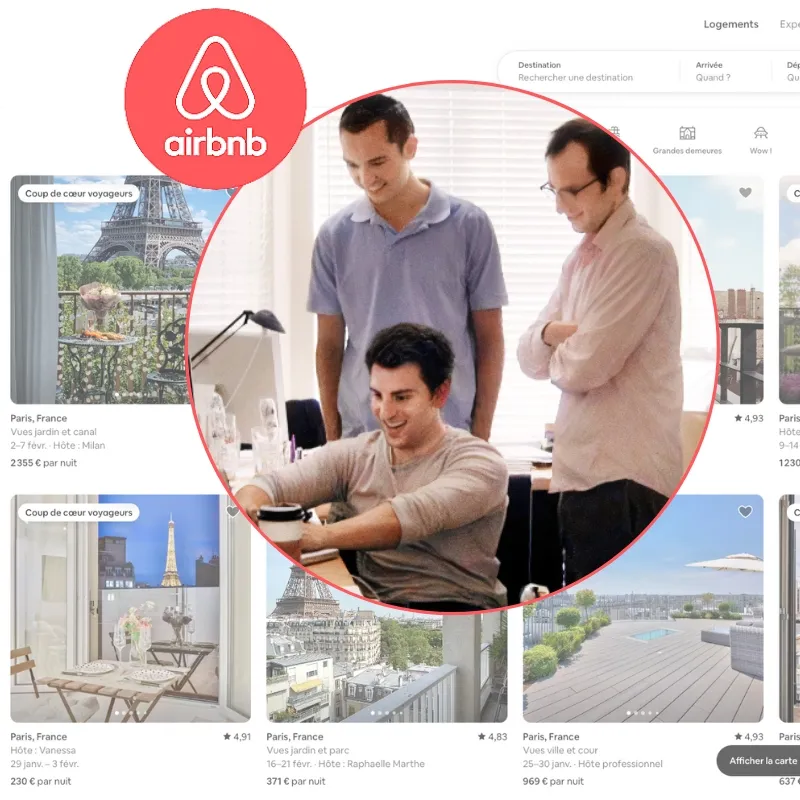
Since its founding in 2008 in the USA by Brian Chesky, Nathan Blecharczyk, and Joe Gebbia, Airbnb has revolutionized the tourism industry. By offering an alternative to hotels, the platform has enabled millions of travelers to access unique and often more affordable accommodations. As of June 30, 2024, Airbnb had more than 8 million active listings worldwide.
However, this meteoric growth has not been without consequences. In France, many municipalities, particularly along the coastlines and in mountain areas, have raised concerns about the housing market tension that has intensified over the past 10 years — tension that may be largely linked to the impact of short-term rentals.
The increase in short-term rentals has caused a scarcity of available housing for permanent residents.
Since 2021, rent increases for small-surface dwellings have averaged approximately 15% in cities without rent controls (and 8.8% in those with rent control measures in place).
Furthermore, citizen groups and municipalities have expressed concerns about the impact on local life, with a decline in the availability of long-term housing.
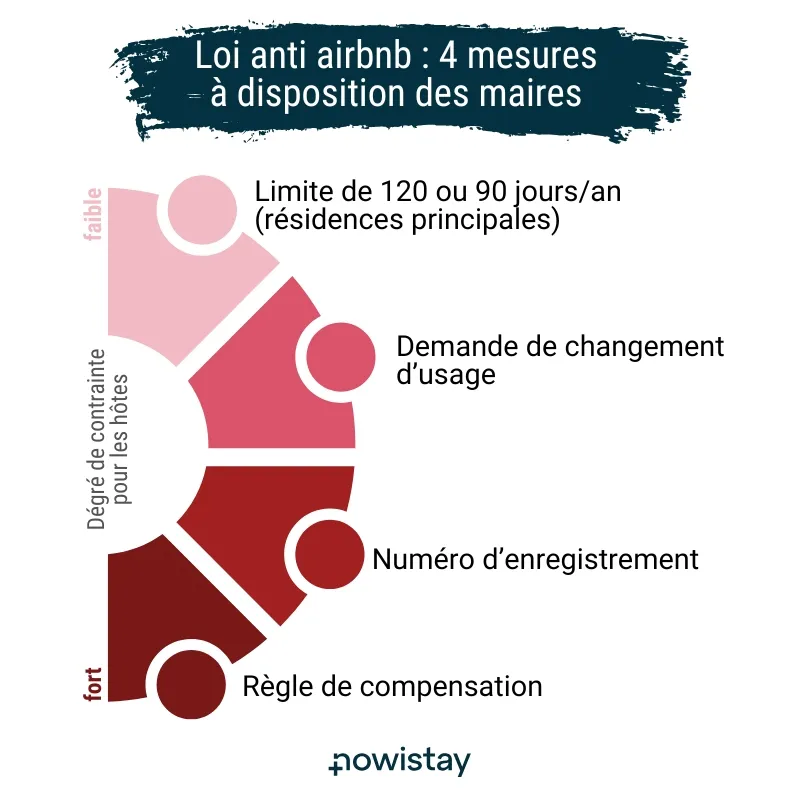
For several years now, there has been a real arsenal of measures available to municipalities to regulate the supply of Airbnb rentals. These measures, labeled as anti-Airbnb, can be classified according to their degree of constraint on Airbnb property owners.
For income received from 1 January 2025, tax rules changed drastically:
These measures aim to reduce the tax appeal of short-term rentals in favor of long-term leases.
In metropolitan France, new tourist accommodations located in high-demand zones and subject to change-of-use authorization must meet the following criteria:
This rule is part of a broader effort to combat energy-inefficient buildings.
The maximum duration for short-term rental of a primary residence stays at 120 days per calendar year by default, but a commune can now lower it to as few as 90 days per year by a reasoned decision of its council.
Paris was the first city to apply this 90-day annual limit, from 1 January 2025, on how long primary residences can be rented to tourists, and other communes can follow with their own decision.
Exceeding the cap exposes you to a civil fine of up to 15,000 euros, the amount set by the Le Meur law (Service-public’s guide, last checked on 21 May 2026, still shows 10,000 euros, so confirm with your town hall).
Municipalities now have broader powers to:
All tourist accommodation rentals must be registered through a dedicated national online service. The law set May 20, 2026 as the latest date, but the State now plans to open the service in the fourth quarter of 2026. Until then, registration is mandatory in communes that run their own procedure, and once the national service opens, numbers issued by communes must be renewed on it within a transition period of several months (Service-public). The property owner must provide proof that the listed property is indeed their primary residence, by submitting their tax notice issued in their name showing the tourist accommodation’s address.
Since 2025, any co-owner who registers a property as tourist accommodation with the city must also inform their property management association.
Furthermore, where the co-ownership bylaws contain a residential-use clause, co-owners can now ban furnished tourist rentals in lots that are not a primary residence by a two-thirds majority vote instead of unanimity. The Conseil constitutionnel upheld this rule on 19 March 2026 (decision no. 2025-1186 QPC).
Regarding new co-ownership bylaws: they may prohibit or authorize tourist accommodations in the buildings concerned.
The anti-Airbnb law primarily aims to align rental objectives with those of the energy transition. By requiring mandatory Energy Performance Certificates (EPC) for tourist accommodations, it compels property owners to renovate their properties to reduce energy consumption. These measures also contribute to combating energy-inefficient buildings, a national priority within the framework of France’s climate objectives.
The other major objective of this new law is to preserve access to housing for permanent residents. By authorizing the limitation of primary residence rental duration to 90 days per year, communes aim to discourage property owners from favoring short-term rentals over long-term leases.
Additionally, the tax regime revision makes traditional long-term rentals more attractive, thus rebalancing the rental supply in favor of permanent residents.
Property owners who wish to become Airbnb hosts may need to carry out energy renovation work to comply with the new EPC requirements. This compliance represents a significant investment but could also increase property value in the long term.
Landlords must also comply with the various regulations of the city where their tourist accommodation is located and stay regularly informed of any updates.
Many property owners have real concerns about potential loss of income and new administrative constraints. However, some see this as an opportunity for professionalizing their activity.
The toughening of penalties is likely to deter violators. Landlords must also ensure they follow registration procedures and respect local quotas.
Here is a non-exhaustive list of the maximum fines set by the Le Meur law (loi n° 2024-1039 on Légifrance). The amounts for registration and the day cap apply at the latest since 20 May 2026, but Service-public’s guide, last checked on 21 May 2026, still shows the former amounts of 5,000 euros for failing to register and 10,000 euros for exceeding the day cap, so confirm with your town hall:
The reduction in properties available for short-term rental could lead to lower rents in high-demand areas, according to a study by the Institut Montaigne (2023).
The decrease in the number of properties available for short-term rental should influence rental prices in high-demand areas. Some tourist rentals could return to the traditional rental market, helping to moderate the rent increases observed in recent years. However, these effects may vary depending on the local policies implemented by municipalities.
As a reminder, all these measures aim to rebalance the rental supply in favor of permanent residents. By freeing up housing initially intended for tourism, this anti-Airbnb law could improve housing accessibility in city centers, particularly for low- and middle-income households. This change could also revitalize neighborhoods historically affected by tourism-only activity.
However, the platforms defend themselves with counter-arguments. Indeed, the housing crisis in France has many other factors, both old and new, such as the lack of new construction, the large proportion of vacant housing or second homes, polarized demographic changes in high-demand areas, and macroeconomic factors (interest rates, household income, etc.).
The anti-Airbnb law marks a major milestone in the regulation of short-term rentals. By reconciling residents’ needs with economic opportunities, it reshapes the balance between tourism and local life. While these reforms are ambitious, their success will depend on their implementation according to the realities of each local market, and on the ability of all stakeholders to adapt! Finally, these measures dedicated to regulating tourist accommodations must be accompanied by broader reforms to address the housing crisis — such as accelerating new housing construction and renovating vacant properties.
First month free, no credit card required. Onboard in minutes, scale to 100+ properties.
Try Nowistay free

Over 25 years of experience in real estate investing and a recognized expert in short-term rental automation. Bassel helps property managers increase revenue, cut operating costs, and deliver 5-star guest experiences using AI-powered tools he built from firsthand hosting experience.
