An AI voice assistant answers guests' questions at any hour, by phone or from the digital welcome guide, from the same information as your written messages, and hands over to you when a person is needed. This guide explains why guests call, the five checks before switching it on, how to measure results, and what Nowistay's voice option costs.

Let guests talk to your AI co-host
Sign up free. The AI co-host answers guests on Airbnb, Booking.com, Expedia, WhatsApp and email, and the voice option lets them call it or talk from the welcome guide. Voice: €10 per month per account, 60 minutes shared by all your properties.
Start freeAn AI voice assistant for a vacation rental is a phone line, or a talk button in the digital welcome guide, where an AI answers guests’ spoken questions about their stay at any hour. It answers from the same information as your written guest messages (arrival steps, wifi, parking, heating, house rules) and hands the call to you when a person is needed. Used well, it takes the calls that cut into your evenings: the guest at the door at 11 pm, the code that “doesn’t work”, the guest who would rather talk than type.
It is worth turning on only if four things are true: it knows the property, it identifies the caller before sharing anything private, it can reach a human fast, and it says it is an AI. Here is why guests still call, what to check before switching one on, and how to tell whether it is working.
Most questions are now answered in writing. The calls that remain are the hard ones, and they cluster around a few moments:
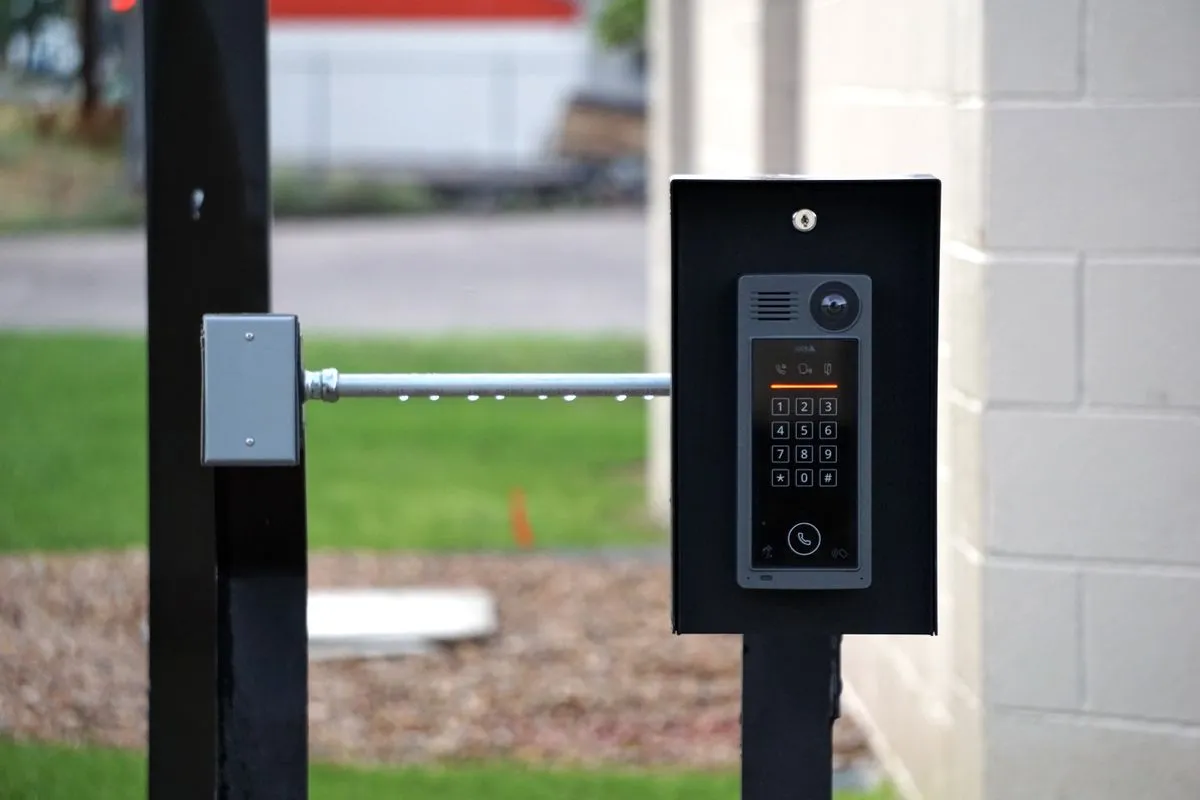
None of these calls are complicated; they are stressful because they are urgent and arrive at the wrong time. That is the ground a voice assistant covers, provided it has the answer. For the written side of the same problem, see how to handle late-night guest messages without losing sleep.
Current voice assistants hold a natural conversation: the guest can interrupt, rephrase or switch language. For a rental, the useful part is a short list:
Voice also has limits that text doesn’t: a noisy street, a weak signal or a strong accent can garble a word. Short answers, and repeating important details such as a code digit by digit, reduce mistakes.
A voice assistant is only as good as the information behind it. Check that your arrival steps, access details, wifi, parking, heating, rubbish and check-out instructions are written where it reads them, ideally the same place your written AI replies use, so guests get the same answer by phone and by message. Then call it yourself and ask the ten questions guests actually ask you. Every “I’ll check with the host” is a gap to fill. How to train your AI co-host explains how to organize that knowledge.
A phone number spreads easily: anyone who sees it in a forwarded message or a photo of the guide can call. The assistant must tie each call to one booking before it discusses access or anything personal. The usual safeguards:
Then check the lock side: door codes should change between stays, so that a code heard on a call or forwarded by a guest stops working at check-out. Self check-in with smart locks explains how per-booking codes work.
Decide in advance what makes the assistant hand over: the guest asks for a person, an emergency, or anything it cannot solve. Then decide where the call goes: your mobile, a co-host’s, the local person on call that week. A transfer to a phone nobody answers at 2 am is not escalation. Check that each handover also leaves a written alert with a summary, so whoever calls back has the context.
Since 2 August 2026, Article 50 of the EU AI Act requires that people who interact directly with an AI system are told so from the start of the first interaction, clearly, unless it is obvious. The European Commission’s guidance on Article 50 places the design duty on the provider of the system and says the “obvious” exception must be read restrictively. A natural, human-sounding voice is exactly the case where it is not obvious. In practice, present the line as an AI assistant in the message that gives guests the number, and listen to how the assistant introduces itself on a test call. Our article on the EU AI Act and AI guest messaging covers who is responsible, wording and fines.
Voice costs more to run than text, and pricing models vary: a monthly fee, included minutes, a price per extra minute. Before you switch it on, check:
Start with one property and a few test calls of your own, then read every transcript for the first weeks. If you have never let an AI answer guests, start in writing: how to test an AI co-host without risk shows how to review its replies before anything reaches a guest. Once the written answers are right, a voice assistant that uses the same knowledge starts from a validated base.
After a month, look at a few numbers and read the transcripts:
Nowistay is a PMS and channel manager with an AI co-host built in. The voice assistant is an option of that co-host: the same AI, speaking.
Pricing: €10 per month excl. VAT for the whole account, including 60 minutes of conversation shared by all your properties, then €0.25 per minute excl. VAT. Turning it on for more properties costs nothing extra; it requires the AI co-host on each property (from €12 per property per month). An optional monthly budget for extra usage caps your spending: when it is reached, voice pauses on all your properties until you raise it or a new month starts, and you get an email warning at 80%. You can also pause voice at any time without changing your billing.
You introduce the line yourself in your automated messages, with the {{voice_phone_number}} and {{voice_access_code}} variables; that message is also the natural place to say it is an AI assistant. The setup is explained step by step in AI voice assistant for guests.
It is a phone line, or a talk button in the digital welcome guide, where an AI answers guests' spoken questions about their stay at any hour: arrival steps, door access, wifi, parking, heating, check-out. It uses the same information as your written guest messages and transfers the call or alerts you when a person is needed.
Yes, that is its main use: arrival questions, keypad problems and small issues at 11 pm or 2 am. It should not handle emergencies on its own: guests must call 112 in the EU or 911 in the US and Canada, and the assistant should alert you or transfer the call.
Only if every call is tied to one booking first, for example by matching the caller's number with the phone number on the reservation or with a private code per booking, and only around the dates of the stay. Door codes should also change between stays so a forwarded code stops working at check-out.
In the EU, yes in practice. Since 2 August 2026, Article 50 of the AI Act requires that people interacting directly with an AI system are informed from the start of the first interaction, unless it is obvious. The duty to design this in sits mainly with the provider of the tool, and a natural voice is rarely obvious, so present the line as an AI assistant when you share the number.
A well-configured assistant says it will check with you, sends you an alert with a summary, and transfers the call when the guest asks for a person or there is an emergency. Each unanswered question is a gap to add to your welcome guide or knowledge base.
The voice option costs €10 per month excl. VAT for the whole account, including 60 minutes of conversation shared by all your properties, then €0.25 per minute excl. VAT. It requires the AI co-host on the property, and an optional monthly budget pauses voice when your extra usage reaches the amount you set.
Stop taking arrival calls at 11 pm
Sign up free. Write your arrival steps once in the digital welcome guide; the AI answers by message and by voice, and alerts you when a guest really needs you. From €12 / $15 per property per month, first month free.
Try Nowistay free

Over 25 years of experience in real estate investing and a recognized expert in short-term rental automation. Bassel helps property managers increase revenue, cut operating costs, and deliver 5-star guest experiences using AI-powered tools he built from firsthand hosting experience.