Investing in Airbnb rentals can be a lucrative strategy for generating passive income. However, the tax obligations associated with short-term rental activity can seem complex and intimidating. This guide offers a comprehensive overview of the tax obligations related to Airbnb rentals in 2025, informed by recent developments and legislative updates from late 2024.
Automate guest communication and boost your reviews with our AI-powered assistant.
Get started freeShort-term rental taxation is constantly evolving, and it is crucial for property owners to stay abreast of the latest legislative updates. The new finance law for 2025 introduces several significant changes that may impact your tax obligations and optimization strategies. These adjustments can influence the choice of the most advantageous tax regime and how you declare your income. To remain compliant and maximize your profits, make sure to stay informed about these new regulations.

When renting a property through platforms like Airbnb, it is imperative to declare the income generated. Whether you rent out an entire home or just a room, the rent received is considered taxable income and must be reported to the tax authorities.
This obligation applies from the very first euro earned, except in the specific case where the rental concerns a room in your primary residence and the rent does not exceed 760 euros per year.
Good to know: Since 2020, platforms like Airbnb automatically transmit your rental income to the tax authorities, making it unavoidable to declare these earnings.
When renting a property on Airbnb, it must be furnished, giving you the status of a furnished rental operator. Depending on your rental income, you may be classified as a Non-Professional Furnished Rental Operator (LMNP) or a Professional Furnished Rental Operator (LMP).
You are considered LMNP if your annual rental income is below 23,000 euros or if this income is less than your other professional earnings. This status offers favorable taxation, including a higher threshold for the real estate wealth tax (IFI).
LMP status applies if your rental income exceeds 23,000 euros and represents your main source of income. This status offers advantages such as the ability to offset rental losses against your other income and capital gains tax exemptions after meeting certain holding period conditions.
For more information on LMP and LMNP statuses, download our free Airbnb Tax Guide 2025
As a furnished rental operator, your income is subject to industrial and commercial profits (BIC). You can choose between the Micro-BIC regime and the actual expense regime.
This regime applies by default if your rental revenue does not exceed 15,000 euros (or 77,000 euros for classified tourist accommodation). It offers a flat-rate deduction of 30%, meaning you will be taxed on 70% of the rent received. However, this regime does not allow you to deduct actual expenses incurred.
The actual expense regime applies automatically if your revenue exceeds 15,000 euros (or 77,000 euros for classified tourist accommodation). This regime allows you to deduct all expenses necessary for the rental, as well as depreciate the property, furniture, and renovation costs, which can significantly reduce your tax base.
To determine which regime to choose through concrete examples, download our free Airbnb Tax Guide 2025
In addition to income tax, several other taxes may apply to Airbnb rentals:
How you declare your rental income depends on the chosen tax regime:
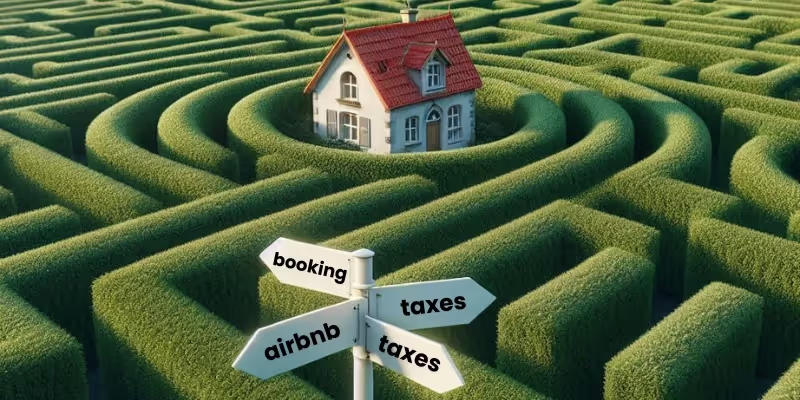
Airbnb rental taxation may seem complex, but it is crucial to understand your obligations in order to avoid tax penalties and optimize your investment. Whether you are a beginner or an expert in short-term rentals, our Airbnb Tax Guide 2025 is designed to provide you with all the information you need to navigate the tax maze and maximize your rental income.
Use our digital welcome guide + AI assistant to deliver 5-star experiences.
Try it free

Over 25 years of experience in real estate investing and a recognized expert in short-term rental automation. Bassel helps property managers increase revenue, cut operating costs, and deliver 5-star guest experiences using AI-powered tools he built from firsthand hosting experience.