Airbnb is often seen as the ideal solution for property owners looking to rent their homes to tourists. However, the platform has major drawbacks that every potential host should know about. In this article (and video), I explore the lesser-known aspects of Airbnb and explain why it is crucial to diversify your rental channels.
Nowistay helps you manage guests across all platforms with AI-powered automation.
Get started freeAirbnb started in 2008 as a sharing platform, allowing people to rent a couch or a room in their home or apartment.
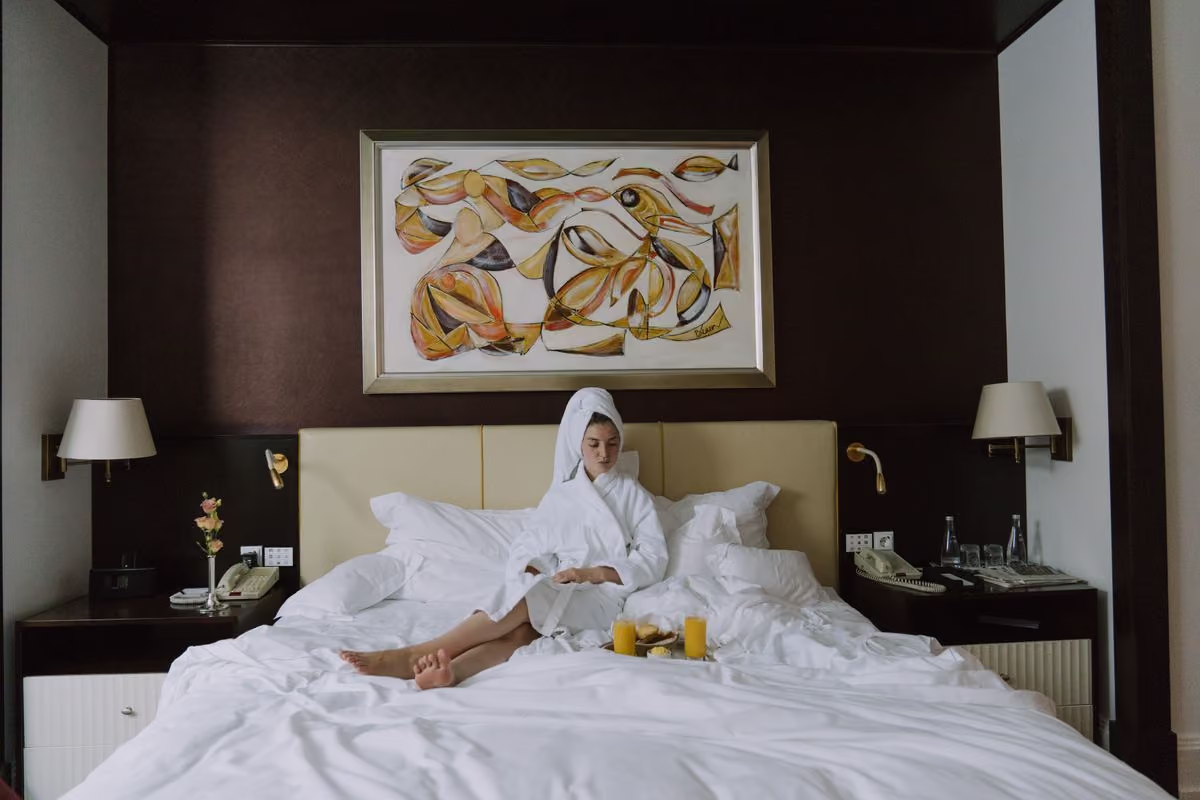
The name Airbnb originally comes from "AirBed and Breakfast" -- perfectly illustrating the service offered: individuals renting all or part of their own home, breakfast included, as budget accommodation.
Quickly, Airbnb transformed into a tourist rental platform, generating billions in profits for the American company that runs it. The website covers more than 1.5 million listings in over 34,000 cities and 191 countries. This evolution has fundamentally changed the dynamic between Airbnb and its hosts.
It is essential to understand that Airbnb considers travelers as its primary customers. They are the ones who pay to use the platform, while hosts bear all the costs associated with listing their property. This includes decoration, renovations, equipment, and cleaning. Airbnb focuses on traveler satisfaction, sometimes at the expense of hosts.
A negative review can have significant consequences for a host. For example, a review based on unrealistic expectations, such as the absence of breakfast or bottled water, can affect the property's overall rating.
It is important to know that Airbnb generally does not remove reviews, unless they are abusive or defamatory, which can leave hosts in a difficult position.
This article might interest you: 8 tips for getting the best reviews on Airbnb
Airbnb has decided to focus on the quality of the properties listed. This means that many property owners may find themselves excluded from the platform if their property does not meet Airbnb's quality standards. This strategy aims to attract discerning travelers, but it can leave hosts with no leverage.
As you can see, Airbnb is very powerful. The platform can decide to remove your listing overnight for multiple reasons. It also controls your revenue since it could potentially raise its fee structure for property owners. In short, do not make the mistake of putting all your eggs in one basket!
To avoid depending solely on Airbnb, it is crucial to diversify your rental channels. There are other platforms like Booking.com and Vrbo that can be used in parallel. Using a centralized channel management software (channel manager) can make managing reservations across multiple platforms much easier.
Another solution to increase your revenue and gain independence is to create your own booking website. This allows you to reduce the commissions charged by platforms (typically 15% to 20%) and develop a direct relationship with customers. And get it online as soon as possible! Of course, having a direct booking website requires skills in search engine optimization (SEO), advertising, and brand management.

To conclude, Airbnb can be a useful platform for property owners looking to rent their homes, but it is important to understand its limitations and risks. Diversifying your rental channels and creating your own booking website are essential strategies to ensure the long-term viability of your tourist rental business. By taking a proactive approach, hosts can maximize their revenue and reduce their dependence on a single platform.
To add direct booking to your website with Nowistay, follow this setup guide: How to set up direct booking on your website.
Centralize your Airbnb and Booking messages with our AI co-host.
Try it free

Over 25 years of experience in real estate investing and a recognized expert in short-term rental automation. Bassel helps property managers increase revenue, cut operating costs, and deliver 5-star guest experiences using AI-powered tools he built from firsthand hosting experience.