The best smart lock for a rental is the one that fits your door, stays reachable when you are away and gets a fresh code for every booking. This guide sets out six criteria, the lock families for European cylinders, US deadbolts, building entrances and properties without Wi-Fi, the setup mistakes that lock guests out, and which locks Nowistay automates.
Codes that create, send and expire themselves
Sign up free. Connect your Nuki, igloohome, TTLock, Tedee or Homeit lock and Nowistay creates a code for each booking, adds it to your check-in message, and the code expires after the stay. From €12 / $15 per property per month, first month free.
Start freeThe best smart lock for an Airbnb or vacation rental is the one that fits your door as it is, keeps working when you are not there, and lets your booking software create a unique code for each guest that stops working after checkout. In Europe that usually means a lock mounted on the inside of a standard euro-profile cylinder (Nuki, Tedee, Yale Linus L2) or a keypad lock from igloohome or a TTLock-based maker. In the US it means a deadbolt lock with Wi-Fi and a keypad (Yale Assure Lock 2, Schlage Encode Plus, August Wi-Fi Smart Lock with its keypad, or Nuki’s US model).
No lock is best for every rental. Below are the six criteria that decide it, the options that fit each situation, and the setup mistakes that leave a guest stuck on the doorstep at midnight. Prices are manufacturers’ list prices checked in October 2026.
Start with the door, not the brand. Most European flats use a euro-profile cylinder. Retrofit locks clamp onto the inside of that cylinder and turn it like a key: no drilling, the outside key still works, and the lock comes off without marks when you leave a rented flat. Check the cylinder before ordering. Nuki says its Smart Lock Pro fits euro-profile and selected Swiss round cylinders, Tedee’s GO2 needs a double-clutch cylinder (one that opens with a key even when another key is inserted on the inside), and Yale asks for a cylinder protruding at least 3 mm for the Linus L2. If yours doesn’t fit, Yale and Tedee sell matching cylinders, or a locksmith can fit one.
US homes mostly have a single-cylinder deadbolt. You can keep it and add a motorised unit on the inside (August Wi-Fi Smart Lock, Nuki’s US model), or replace it with a keypad deadbolt (Yale Assure Lock 2, Schlage Encode Plus).
In a city apartment the guest usually passes a street door first, often with an intercom. A smart lock on the flat door doesn’t solve that. Your options: an intercom module such as the Nuki Opener (EUR 129, plus a Nuki Bridge for remote opening), a building access system such as Homeit, which connects to the intercom, or a key handover point or locker holding the building key. Get written approval from the building manager or co-owners before fitting anything on a shared door.
For a rental, the lock has to be reachable over the internet. Otherwise you can’t send it a new code from home, move a code when dates change, or see when the guest arrived. Some locks have Wi-Fi built in: Nuki Smart Lock Pro, Yale Linus L2, the Wi-Fi versions of the Yale Assure Lock 2, Schlage Encode Plus and August Wi-Fi Smart Lock. Others are Bluetooth locks that need a bridge or gateway plugged in near the door: Tedee Bridge, igloohome Bridge, a TTLock gateway, or the Nuki Bridge for the Opener. Nuki’s cheaper Smart Lock Go (EUR 149) has Wi-Fi, but remote access is a separate one-time purchase according to Nuki’s product page.
Some systems still issue time-limited codes when the lock has no connection. igloohome’s algoPIN codes carry their validity period inside the code, and the lock verifies them offline. TTLock locks offer a similar offline passcode. It is the practical choice for a cabin or a house without internet, with real limits: an offline code can’t be cancelled early, so a cancelled guest’s code keeps working until its end date, and validity is often rounded to whole hours.
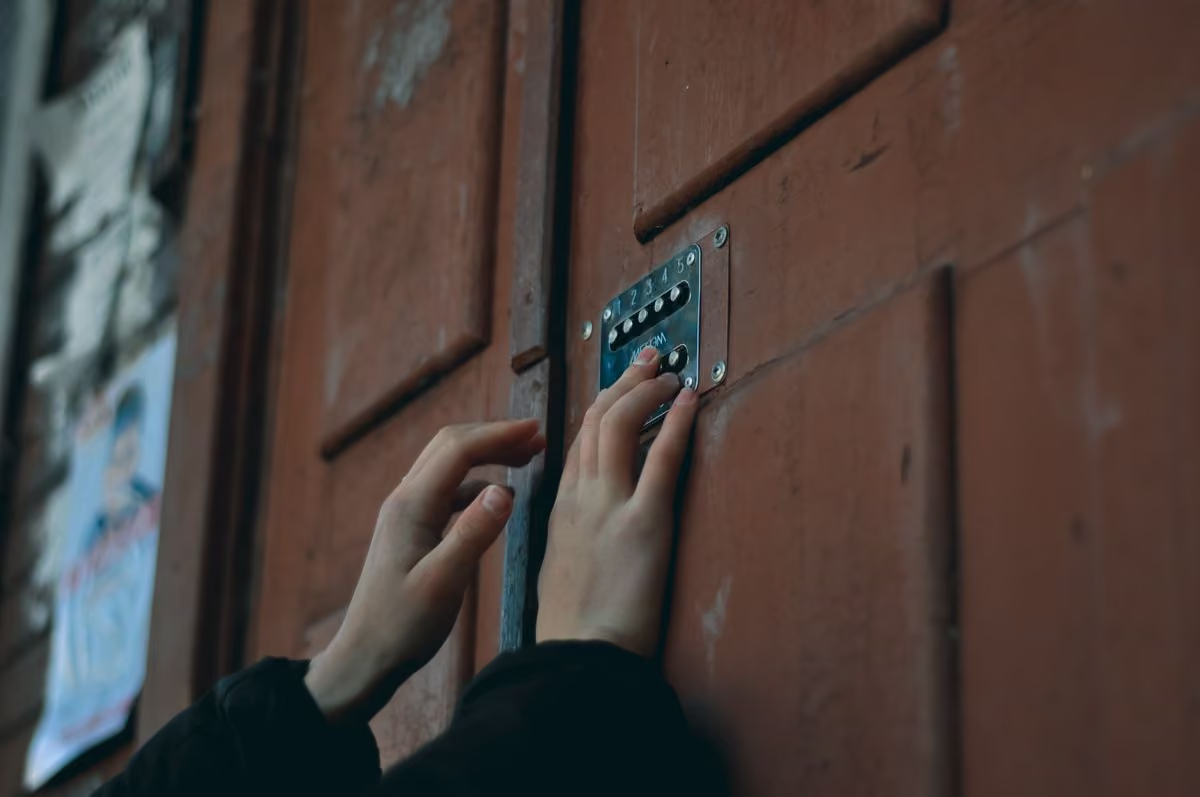
Guests should never need to install an app to get in. A keypad with a numeric code works for every guest, whatever their phone or its battery level. Opening from a phone or a link is a convenient extra, not a substitute. Check the power source as well: the Nuki Smart Lock Pro and Tedee PRO recharge on the door, while the Nuki Smart Lock Go, the Yale Assure Lock 2 (four AA) and the August Wi-Fi Smart Lock (two CR123, up to three months according to August) run on replaceable batteries.
This criterion saves the most time. A lock that your property management system supports gets a new code for each booking, inserted into your check-in message and removed at checkout, without you opening the lock’s app. An unsupported lock means typing codes by hand for every stay. Check your PMS’s list of supported brands before you buy, and whether the lock maker or the software charges extra for the connection.
TTLock is not one brand: it is the app and cloud platform behind keypad locks sold by many manufacturers, often at lower prices. Choose a model sold with a compatible TTLock gateway so codes can be managed remotely, and check the seller’s after-sales support, which varies a lot from one maker to another.
igloohome makes deadbolts, mortise locks, padlocks and key boxes, sold in Europe, the UK, the US and Asia, with offline algoPIN codes. TTLock offline passcodes are the other route. Accept that these codes can’t be revoked before they expire.
Keep the keys and automate the handover. KeyNest reports more than 7,000 public KeyNest Points in over 800 cities, plus private lockers, where the guest collects the key with a code. A smart key box such as the igloohome Keybox 3 does the same job at the door. A mechanical key box with a fixed code is the cheapest option, but every past guest and cleaner knows the code until you change it by hand.
The full workflow is in how to set up smart lock codes that auto-generate, auto-deliver and auto-expire, the guest journey in self check-in with smart locks, and the message side in automated check-in and check-out instructions. To screen guests before handing over access, see guest identity verification.
Nowistay is a PMS and channel manager with an AI co-host built in, and it connects to the lock brands above. Nuki, igloohome, TTLock, Tedee and Homeit are included in the plan at EUR 12 (USD 15) per property per month. Yale, Schlage, August and KeyNest connect through the Premium smart locks option at EUR 5 per device per month: a device is billed once you assign it to a property, and unassigned devices cost nothing.
{{smartlock_code}} variable places the code in your automated guest messages.{{smartlock_code_2}} for the second door. Doors that can open remotely (Nuki, Tedee, compatible Yale, Schlage and August devices, TTLock with a gateway, igloohome with a Bridge) can also get a personal opening link that works during the stay.Two limits to know. Lock settings are available for properties connected through Nowistay PMS, the built-in channel manager; a property linked by a direct OTA connection or another PMS won’t appear in them. And offline codes (TTLock without a gateway, igloohome algoPIN) can’t be revoked before their end date. Step-by-step guides: connect a Nuki lock and connect a Yale lock.
There is no single best lock: pick the one that fits your door, stays connected and is supported by your PMS. In Europe, retrofit locks on a euro-profile cylinder (Nuki, Tedee, Yale Linus L2) and keypad locks from igloohome or TTLock-based makers are common choices. In the US, Wi-Fi keypad deadbolts such as the Yale Assure Lock 2 or Schlage Encode Plus, or retrofits such as the August Wi-Fi Smart Lock, fit most doors.
To change or cancel codes remotely and see when guests arrive, yes: the lock needs built-in Wi-Fi or a bridge or gateway near the door. Without internet, igloohome algoPIN codes and TTLock offline passcodes still work, but they can't be revoked before their end date.
Treat the street door separately. An intercom module such as the Nuki Opener lets guests open it remotely, systems such as Homeit connect to the intercom and work with codes, and a key handover service such as KeyNest can hold the building key. Ask the building manager or co-owners before fitting anything on a shared door.
They shouldn't. A keypad with a code that changes for each booking works for every guest. App or link opening is a useful extra, for example for a building door without a keypad, but it shouldn't be the only way in.
On the manufacturers' sites in October 2026, the Nuki Smart Lock Go costs EUR 149 and the Smart Lock Pro EUR 269, with a keypad on top. In the US, the August Wi-Fi Smart Lock is listed at USD 199.99, Nuki's deadbolt model at USD 199 and the Yale Assure Lock 2 with Wi-Fi from USD 279.99. Add a bridge or gateway where the lock needs one.
Nuki, igloohome, TTLock, Tedee and Homeit are included in the plan at EUR 12 per property per month. Yale, Schlage, August and KeyNest connect through the Premium smart locks option at EUR 5 per device per month, billed when the device is assigned to a property. Codes are generated, sent and revoked per booking, with up to two doors per property.
One place for bookings, messages and door access
Sign up free. Sync Airbnb, Booking.com, Vrbo and Expedia, let the autonomous AI co-host answer guests on Airbnb, Booking.com, Expedia, WhatsApp and email, and see the arrival time recorded by compatible locks.
Try Nowistay free

Over 25 years of experience in real estate investing and a recognized expert in short-term rental automation. Bassel helps property managers increase revenue, cut operating costs, and deliver 5-star guest experiences using AI-powered tools he built from firsthand hosting experience.