Allowing pets can raise your booking rate and nightly price and open a loyal, underserved segment, but it adds damage risk, deep-clean cost, allergy issues for the next guest, and the service-animal question where you usually cannot charge or refuse. This guide runs the revenue-versus-cost math, surveys the standard ways hosts protect themselves, and defines what a profitable pet policy looks like.
Sign up free. Build a pet add-on page in your welcome guide with a Stripe payment link, let the autonomous AI co-host answer pet questions in seconds across Airbnb, Booking.com, WhatsApp, and email, and back every stay with turnover photo checklists and verified guest identity. $12 per property per month after the trial.
Start free trialA guest messages you on a Tuesday night. They love your place, the dates are open, they are ready to book, and they have one question: can they bring their dog? You have ten seconds to decide whether that message is found revenue or a future cleaning bill. Say yes and you might fill a midweek gap and earn a small premium. Say no and you watch a confirmed-intent booking go to the listing down the road that does allow pets.
Pets are one of the few levers that move both your occupancy and your nightly rate at the same time, and the demand is real: a large share of travelers own a pet, many refuse to leave it behind, and the supply of genuinely pet-friendly rentals is thin. The catch is that the upside is easy to see and the downside is easy to underestimate. Chewed baseboards, a deposit you never collected, a deep clean that runs long, and an allergic guest in the next stay are all costs that land after the booking is already in your calendar. This is a math problem and a policy problem, not a gut call.
Pet owners are a loyal, underserved segment. When someone finds a place that genuinely welcomes their animal, they rebook it, they recommend it, and they are less price-sensitive because their options are limited. Filtering for pet-friendly listings cuts the available inventory sharply, so the few hosts who do it well capture demand that the rest of the market turns away. That scarcity is exactly why the segment pays.
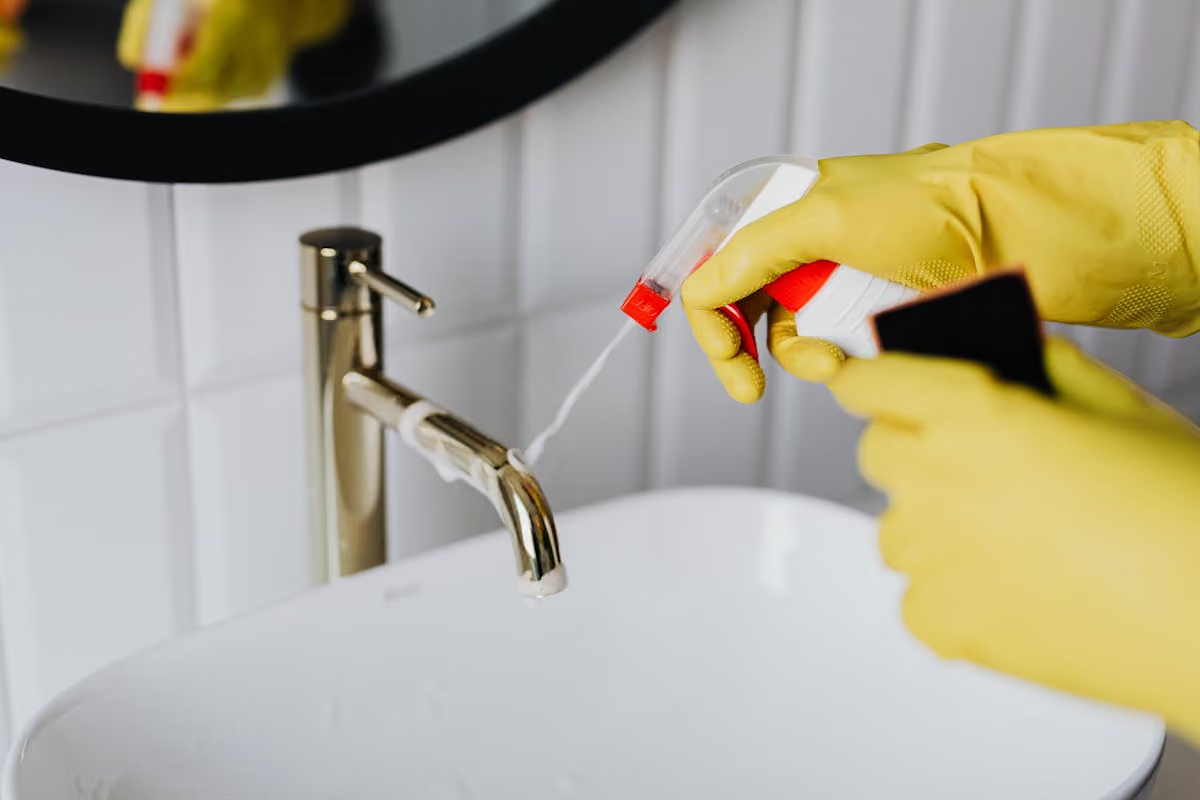
The cost side is where hosts get hurt. A typical pet stay adds real turnover work: extra vacuuming for hair, lint-rolling soft furnishings, checking for accidents, and an allergy-grade clean so the next guest does not walk into a room that smells like a kennel. Plan on USD 30-60 of added cleaning time and supplies per pet stay as a working estimate, more if you use a service. Damage is rarer but heavier: a single incident of scratched floors or a stained mattress can erase the pet premium from a dozen bookings. And the allergy risk compounds, because one rushed turnover can generate a one-star review from a sensitive guest who never saw the dog.
Then there is the service-animal question, which is a legal issue and not a pricing one. In the United States and many other markets, a trained service animal is not a pet. You generally cannot refuse it, you cannot charge a pet fee for it, and you cannot apply your pet rules to it. Emotional-support animals are treated differently and the rules vary by platform and jurisdiction, so the safe posture is to know your local law, document your policy clearly, and never improvise a refusal in a live chat.
Most pet-friendly hosts assemble some combination of the following. None is complete on its own, and the right mix depends on how much risk you are willing to carry.
A profitable pet policy is not about which tool you buy. It comes down to four things you can check against any setup.
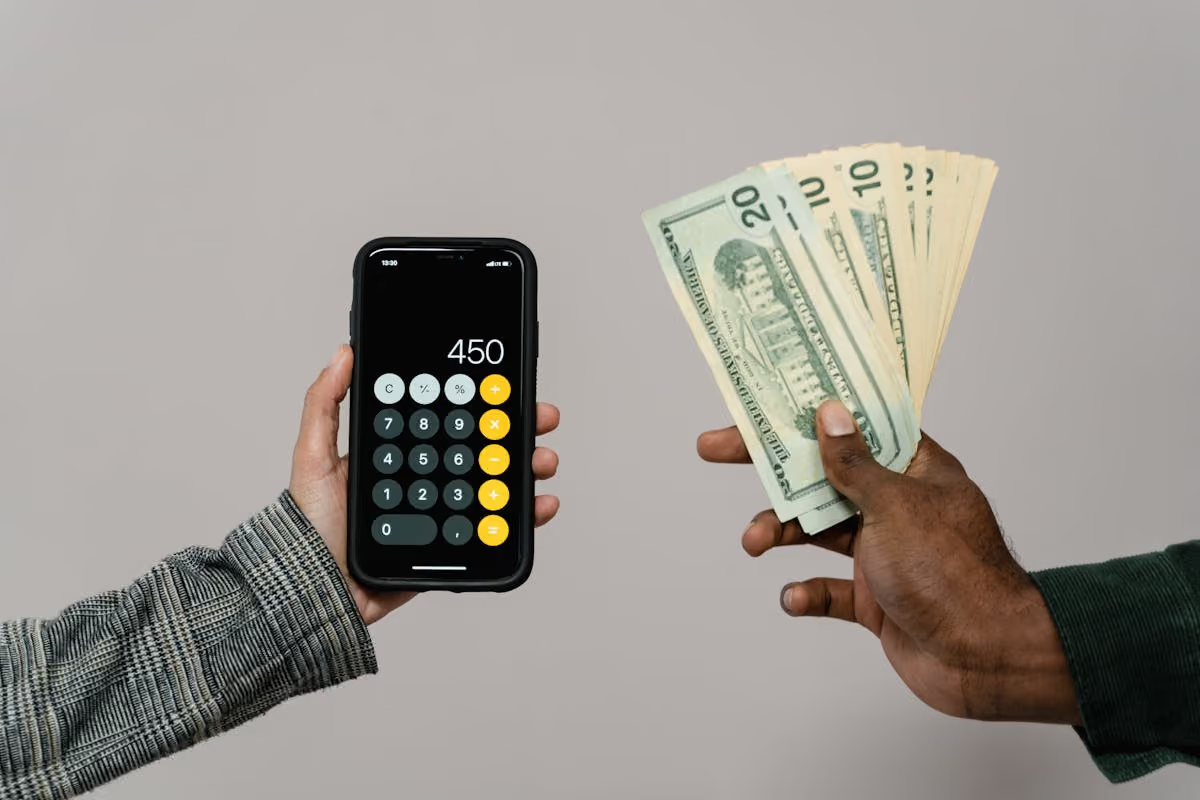
The demand-versus-cost math actually pencils out. Estimate the share of inquiries that mention a pet, the premium you can charge, and the realistic added cost per stay (cleaning plus an amortized allowance for occasional damage). If the premium and the incremental bookings clear the cost, allow pets. If your property has white upholstery, new hardwood, and a tight turnaround window, the math may say no, and that is a valid answer.
The policy is written, specific, and visible before booking. Number of pets, size limit, where the animal may go, crating expectations, and the fee. A vague "pets considered" invites the exact disputes you are trying to avoid.
There is an allergy and cleaning protocol the turnover team follows every time. Hair removal, an accident check, and an allergy-grade clean are written into the checklist, not left to memory, so the next guest never inherits the last guest's dog.
You can prove what happened if damage occurs. Dated condition photos at turnover and a verified identity for the booking guest are the difference between a paid claim and a he-said-she-said. Without evidence, a deposit or damage program is hard to enforce.
Nowistay does not turn the pet decision into a black box, but it removes most of the operational friction once you have decided to allow them. The pet fee itself lives in the branded welcome guide you build per property: you create a paid add-on page for the pet fee with a Stripe payment link, the same way you would set up early check-in or late checkout, and the guest pays through that link. It is a host-built guide page plus a Stripe link, not a structured checkout step, so you control the wording and the amount. Because the welcome guide is part of the AI co-host's per-property knowledge, the AI can point a guest to the pet add-on when they ask, answering in seconds and in 15+ languages on Airbnb, Booking.com, WhatsApp, and email. Your pet house rules live in that same guide, so the policy a guest sees is the policy the AI answers from.
The protection side is where the platform earns its keep. Set up your turnover photo checklists once so the cleaning and maintenance team documents the unit at every changeover, including the pet-specific hair, accident, and allergy-grade clean steps; you can configure those in your team cleaning checklists. Those dated photos are your condition record. Pair them with verified guest identity through guest identity verification, which checks the booking guest's ID against the booking name through Stripe Identity while the documents stay with the verification provider rather than in your inbox. If a pet does damage something, the photo trail plus a known, verified guest is exactly the evidence a deposit hold or a damage claim needs. Nowistay does not decide or issue refunds or charges for you, and the AI does not adjudicate a damage dispute; it surfaces the conversation and flags it, and you make the call. Whether you do this through Nowistay, a stack of point tools, or a full PMS, the four criteria above are still the test.
If your cleaning fee assumes a no-pet turnover, every pet stay quietly costs you. Either raise the cleaning fee for pet stays or charge a dedicated pet fee that covers the added work. Free pets are not a feature, they are a subsidy.
Charging a pet fee for a service animal or refusing one can put you on the wrong side of the law and the platform's policy. Learn the rule in your market, write it into your policy, and never improvise a refusal in chat.
Trying to charge for damage you cannot document turns into a dispute you lose. The condition photos and the verified guest have to exist before the stay, not be reconstructed after it.
"Pets maybe" with no size limit, count, or fee guarantees friction. Specifics protect you and set the guest's expectations before they book.
A rushed pet turnover lands as a one-star review from the next guest, who never agreed to a dog. The allergy-grade clean has to be a fixed checklist step, not an afterthought.
Pet-friendly is not a moral position or a marketing badge. It is a deliberate trade where you accept a known, fundable cost in exchange for a loyal segment most hosts ignore. Hosts who win at it do the math first, write a policy they can stand behind, fund the clean, and keep the evidence that turns a damage risk into a manageable line item. Do that, and the dog in the Tuesday-night message stops being a gamble and becomes one of the more reliable ways to fill your calendar.
Sign up free. Set your pet rules and fee in one place, document every changeover with photo checklists, and keep verified guest identity on file so a damage claim has evidence behind it. Onboard a property in minutes and scale from one to a hundred.
Try Nowistay free

Over 25 years of experience in real estate investing and a recognized expert in short-term rental automation. Bassel helps property managers increase revenue, cut operating costs, and deliver 5-star guest experiences using AI-powered tools he built from firsthand hosting experience.