An empty off-season unit is where small failures turn into four-figure repairs you discover weeks too late. This guide walks through a real winterize routine, the sensors and checks that back it up, and a de-winterize plan so the next guest walks into a property that works. It surveys the standard tools neutrally, then shows how Nowistay turns the seasonal work into assigned missions with photo proof.

Sign up free. Create one-off winterize and de-winterize missions, assign them to your team with photo checklists as completion proof, and reuse the checklist every season while Nowistay handles the dispatch and record-keeping. $12 per property per month after the trial.
Start free trialThe call almost always comes from the cleaner, not a sensor. A guest is arriving in three hours, the cleaner has just opened the door, and there is water across the kitchen floor, a stain spreading down the hallway ceiling, and a radiator that has been cold for weeks. The pipe behind the wall split during a cold snap in February. Nobody was there, so the slow leak soaked the subfloor, lifted the laminate, and grew a patch of mold. The repair invoice lands somewhere between USD 2,000 and USD 8,000 depending on how far the water traveled, and the unit is off the market for the better part of a month.
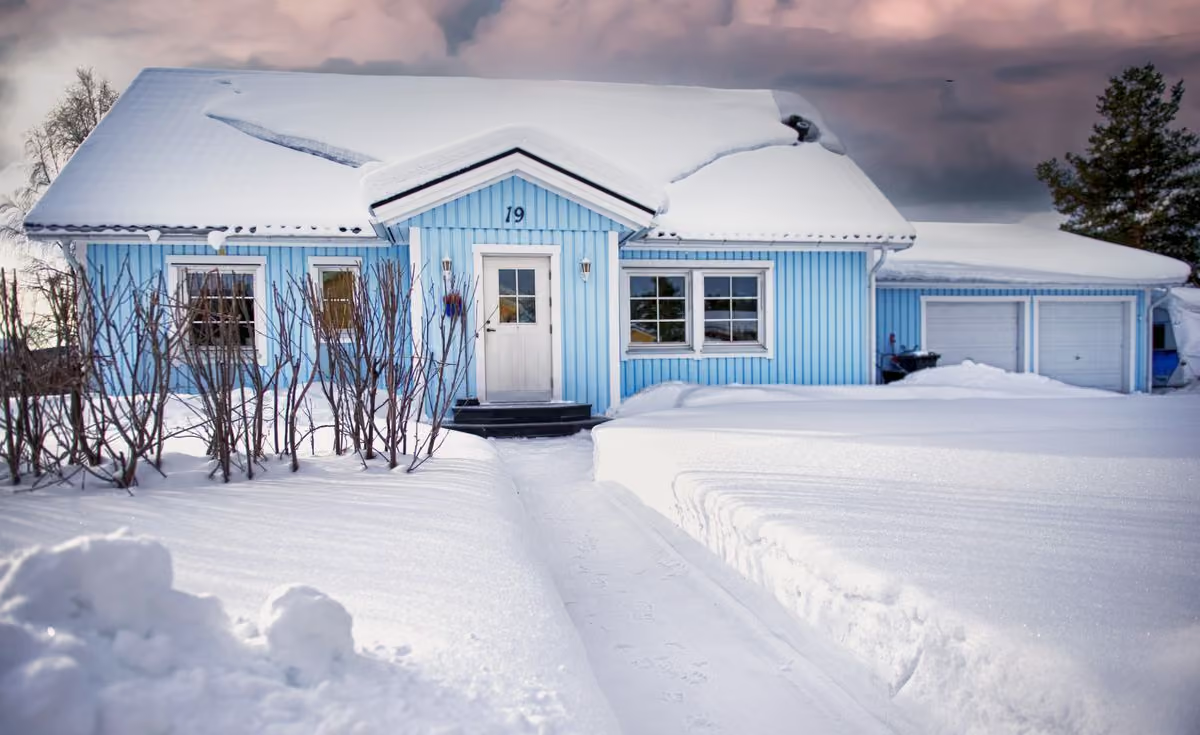
Off-season is the dangerous part of the calendar precisely because nothing is happening. A property with back-to-back guests gets eyes on it every few days. An empty winter unit can sit untouched for six or eight weeks while the temperature drops and the humidity climbs, and the only people who know it is vacant are the ones watching the street. Freeze, damp, and security are three separate failure modes, and the quiet months are when they peak at once. This guide is about making that empty stretch boring again.
The math on off-season damage is brutal because the costs stack, and a burst pipe is not just the plumber. It is the water extraction, the drying equipment running for days, the replaced flooring, mold remediation if it got that far, and the lost nights while the unit is unbookable. A USD 300 pipe repair routinely turns into a five-figure event once water has been sitting for weeks. Many policies also exclude freeze damage if the property was left unheated and unattended, the exact scenario that produces the burst.
Damp is slower and sneakier. Without anyone running extractor fans, opening windows, or generating the everyday warmth of occupancy, moisture settles into corners and along cold external walls. By spring you have mold on the bathroom ceiling, a musty smell in the soft furnishings, and a guest who photographs all of it for the review. Security rounds out the picture: a break-in during a long empty stretch can go undiscovered until the next booking, by which point the loss is total.
The thread connecting all three is detection lag. The damage is rarely catastrophic on day one. It becomes catastrophic because nobody is looking. Every strategy below answers one question: how fast you find out something has gone wrong.
The Red Cross winter storm preparedness guide covers the safety basics every empty property should meet.
There is a well-worn toolkit for this, and most hosts use some combination. The point is to understand what each one actually buys you.
The winterization checklist. The foundational move. Before the property goes dark, you run a fixed routine: shut off the main water, drain the pipes and water heater, add antifreeze to traps and toilets where appropriate, set the thermostat to a minimum hold (commonly around 55F / 13C), unplug non-essential appliances, and empty the fridge. A property with no water in the pipes cannot suffer a burst, which is why draining is the highest-leverage step in cold climates.
Smart leak and temperature sensors. Small battery devices placed under sinks, near the water heater, and in cold corners. A leak sensor sounds the moment it detects water. A temperature sensor alerts you when a room drops toward freezing, your early warning that the heating has failed before a pipe does. They are a backstop, not a cure: a sensor tells you about a problem, it does not prevent it.
Automatic water shutoff valves. A step up from a passive sensor. These sit on the main line and physically close the water when they detect an abnormal flow or leak signal, stopping the flood instead of just reporting it. Usually a plumber install, but for a high-value unit left empty they can pay for themselves in a single avoided incident.
Off-season caretaker walk-throughs. A person, you or a trusted local, physically visits every week or two: runs the taps to keep traps from drying out, checks for leaks and damp, confirms the heating is holding, and picks up mail so the place does not look abandoned. The weakness is consistency: walk-throughs slip when life gets busy, and the gap between visits is when trouble starts.
Dehumidifiers for damp. A unit set to a target humidity (around 50 to 55 percent) runs automatically and pulls moisture from the air during the empty months. In damp-prone properties this is the difference between a fresh unit in spring and a mold problem. Leave interior doors open so air circulates.
Security measures. Light timers that mimic occupancy, a monitored alarm, a video doorbell, and a smart lock so you are not leaving a key under a mat. The goal is to make the unit look lived-in and get an alert the instant anything changes.
Strip away the specific products and the criteria are simple. Good protection is a routine that actually gets done, verified, and then undone correctly before reopening.
Nowistay does not monitor your sensors or touch your plumbing. What it solves is the part that actually fails in practice: making sure the human work gets done correctly and leaves a record. The winterize and de-winterize routines are exactly the multi-step jobs that slip when they live in someone's head.
You create a one-off mission for the winterize work and assign it to the caretaker who handles that property. Missions come in cleaning, maintenance, urgency, and custom types, with assignment modes (auto-balanced, first-come-first-served, or manual) so the job lands with the right person. Attach a photo checklist covering each step: water shut off, pipes and heater drained, traps treated, thermostat set to the minimum hold, appliances unplugged, fridge emptied. The person on site works through it and uploads a photo as proof for each item, so you see the drained heater and the thermostat reading instead of taking it on trust. When the season turns, you create the de-winterize mission the same way.
Missions in Nowistay are one-off, so the seasonal timing is something you trigger, not a calendar that runs itself. The advantage is a reusable checklist. Build the winterize and de-winterize checklists once, and every season you spin up the mission from the same template, dispatch it, and collect the photo proof. Nowistay handles the dispatch and the record-keeping; you decide when it fires. The periodic walk-throughs in between are the same pattern: a maintenance mission with a short checklist on whatever cadence you choose.
The occupied side of the shoulder season is its own quiet risk. A guest who cannot figure out the heating on a cold evening will either crank every radiator to maximum or switch the system off entirely when they leave, which is how you get a frozen unit between bookings. In Nowistay the heating and cold-weather instructions live in the branded welcome guide for that property, and because the guide is part of the AI co-host's per-property knowledge, the AI answers heating questions from it in seconds. You can also put the essentials, how to set the thermostat and please do not turn the system fully off, into the automated arrival message so the guest reads it first. To connect the routine to the rest of your operation, the MCP connector lets you query and act on live data in natural language from ChatGPT, Claude, or Gemini, so you can ask which properties have an open winterize mission across a portfolio.
Whether you run this through Nowistay or a stack of standalone tools and a full PMS, the criteria above are the test: the routine done and verified, sensors as a backstop, checks on a cadence, and a clean de-winterize before the doors reopen.
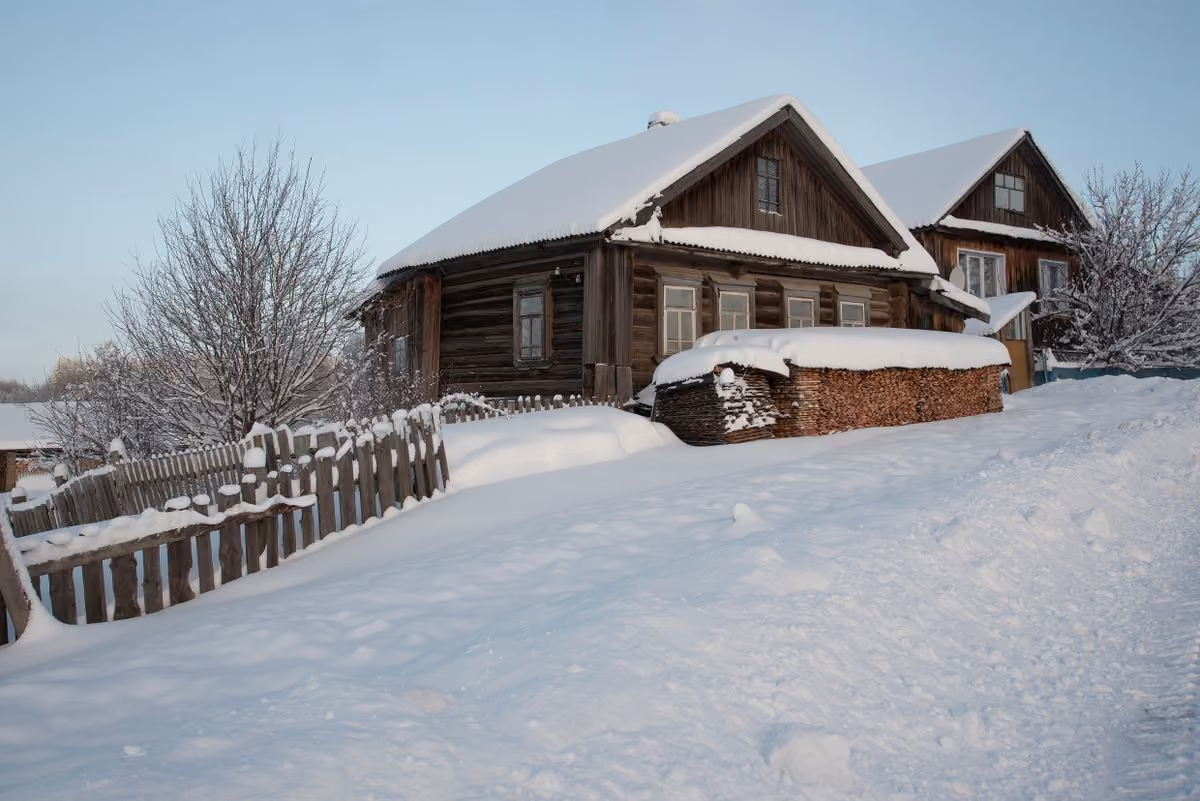
A minimum hold temperature protects you only as long as the heating keeps running. A boiler failure, a power cut, or a tripped breaker during a cold snap removes that protection silently. In a genuinely cold climate, draining the system is safer than trusting a thermostat for two months unattended.
A leak sensor that pings your phone while you are 200 miles away, with nobody able to reach the property for hours, has reduced your detection lag but not your damage. Sensors are most valuable paired with a shutoff valve or a local person who can respond fast.
The check that does not happen is invisible until something has already gone wrong. Walk-throughs fail not because hosts forget they matter but because there is no record, so a skipped visit leaves no trace. Assigning the visit as a tracked task with a confirmation closes that gap.
Plenty of properties are winterized beautifully and then reopened in a rush: water turned back on without a pressure check, a trap left dry so sewer smell greets the guest, no hot water on the first night. The reopening is half the job, and skipping it hands the guest the very failure you spent all winter avoiding.
Holding a minimum temperature does little for humidity in a damp-prone unit. Cold external walls still collect condensation, and mold grows in unheated corners regardless of the thermostat. Damp needs its own answer: a dehumidifier and air circulation, run independently of the heating plan.
If a quiet stretch is coming and you have not prepared, here is a concrete sequence.
The properties that come through winter clean are the ones where the routine was written down, assigned to a named person, verified with proof, and reversed carefully before the first guest. Sensors and valves shorten the gap between a failure and your knowing, but the real protection is the human work getting done and recorded. Build the checklists once, trigger them each season, and let the empty months be boring.
Sign up free. Put your heating and cold-weather instructions in the branded welcome guide and the automated arrival message, so the autonomous AI co-host answers heating questions in seconds and guests know not to crank or kill the system before they touch the thermostat.
Try Nowistay free

Over 25 years of experience in real estate investing and a recognized expert in short-term rental automation. Bassel helps property managers increase revenue, cut operating costs, and deliver 5-star guest experiences using AI-powered tools he built from firsthand hosting experience.