A guest who finds no toilet paper or coffee will mention it in a review, even when the rest of the stay was perfect. This guide shows how to set par levels, make the turnover confirm stock, handle mid-stay requests fast, and reorder before you run dry across a portfolio of any size.

Sign up free. Build restock checks into your cleaning checklists with photo proof, and let the autonomous AI co-host route mid-stay supply requests to your team with a 30-minute escalation back to you. Onboard a property in minutes and run anywhere from one to 100-plus units. EUR 12 (USD 15) per property per month after the free first month.
Start free trialA guest checks in at 9pm after a long drive, reaches for the bathroom, and finds the cardboard tube where the toilet paper should be. The coffee canister is empty too. Neither item costs more than a dollar to replace, but the guest does not know that, and they do not care. What they know is that the place was not ready for them. Two days later you get a four-star review that opens with "great location, but we had to run out for basics the first night." That single line costs you placement in search results and a slice of the trust that converts browsers into bookers.
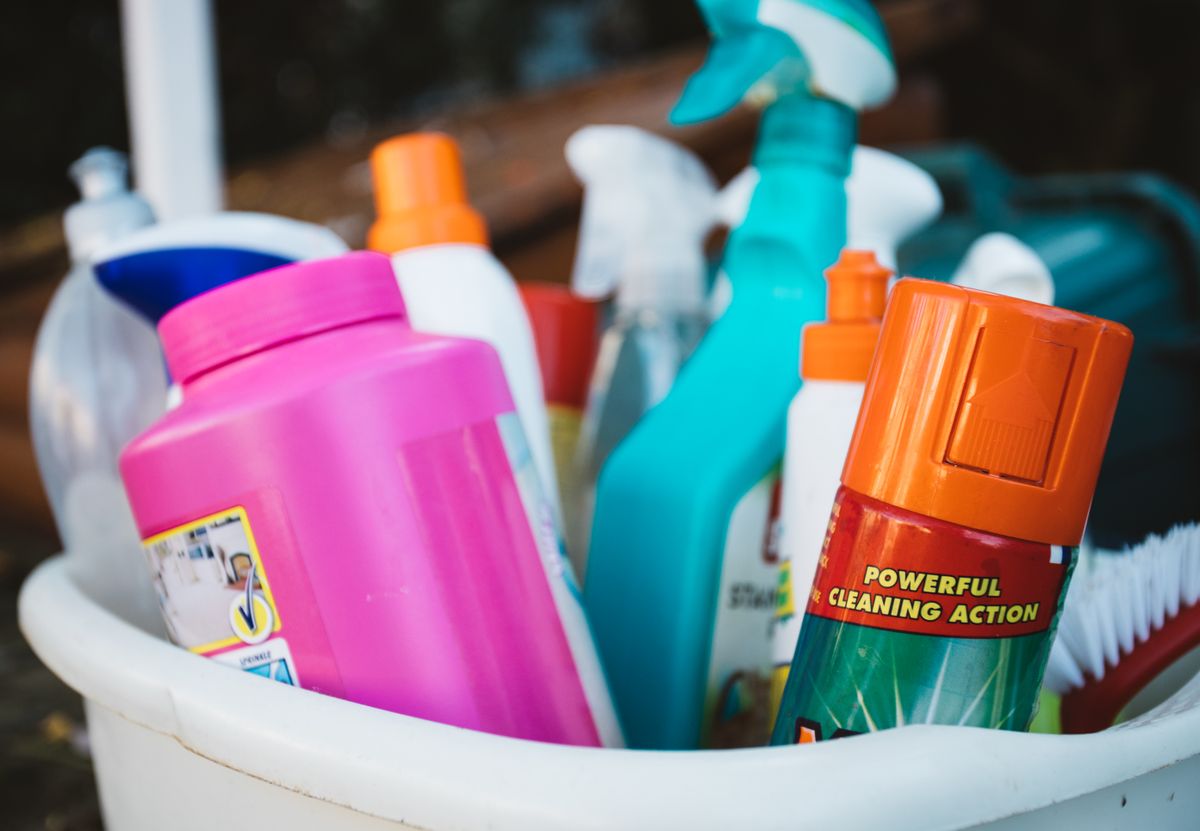
Consumables are the cheapest thing in your operation and the easiest to get wrong. Toilet paper, paper towels, dish soap, dishwasher pods, hand soap, coffee, tea, salt, pepper, trash bags, shampoo, makeup wipes for the white linens: each one is trivial on its own. In aggregate, across several units and dozens of turnovers a month, they are a recurring failure point that depends almost entirely on one person noticing one empty container at the right moment. When that person is rushed, sick, or new, the system has no backup. This is a guide to building the backup.
The math is lopsided in the worst way. A roll of toilet paper costs pennies. A missing roll, discovered by a tired guest, can shave a full star off a review and put a sentence in writing that future guests read before they book. On platforms where ranking is tied to rating and review velocity, a handful of "basics were missing" reviews drags your listing down the page, and lower placement means fewer bookings at the same nightly rate. You are trading a one-dollar item for a measurable revenue hit.
There is an operational cost too. A guest who runs out mid-stay messages you, and now you are coordinating an emergency drop-off or sending an apology and a partial credit. That is your time, your cleaner's time, or a delivery fee, spent on a problem that a 30-cent restock would have prevented. Multiply by a portfolio. If each unit runs out of something once a quarter and each incident eats an hour of coordination plus a small goodwill gesture, the annual drag is real money and real attention diverted from the work that actually grows the business.
The deeper issue is predictability. Most hosts do not know how fast a given unit burns through coffee or toilet paper, so they cannot reorder with confidence. They guess, over-buy some items, run short on others, and lean on the cleaner to catch the gaps. The cleaner is a good last line of defense, but a single point of failure is not a system. When par levels are guesswork, every turnover is a small gamble.
Most operations land on some mix of the following. None is wrong, and the better setups combine several. The point is to see what each one does well and where it leaves a gap.
A restocking system that actually holds up, regardless of the tools behind it, does four things well.
Notice that three of these four are about the turnover and the buffer, not about heroics during a guest's stay. The cheapest place to catch an empty container is the moment between guests, when the unit is yours.
Nowistay does not magically refill your shelves, and it does not pretend to. What it does is close the two gaps that cause most run-outs: an unverified turnover, and a slow mid-stay request. It does this through cleaning checklists and an autonomous AI co-host.
The turnover side runs on photo checklists. When you assign a cleaning mission, the clean comes with a checklist your team works through, and the checklist supports photo proof of completion. You build restock checks straight into it: "12 rolls of toilet paper present," "coffee and tea restocked," "dish soap and dishwasher pods topped up," each with a photo. Now the turnover is not a leap of faith. You can open the completed mission and see the stocked bathroom cabinet and the full coffee station, which means a missed restock is caught between guests instead of by the next arrival. You set these up once and they ride along on every clean. Here is how to build them: create checklists for your team's cleaning. One honest limit worth stating plainly: the checklist is proof that stock was confirmed, not an inventory sensor. It does not watch your shelves, detect a low count on its own, or fire off a reorder. Reordering and par-level buying stay with you and your supplier; the checklist's job is to make sure the human actually looked.
The mid-stay side is where the AI co-host earns its keep. When a guest messages "we're out of dish soap" or "there's no more toilet paper," the autonomous AI co-host reads it, sorts it as a comfort-item request rather than an emergency, and routes it to the right team member by WhatsApp or email. The request carries a 30-minute timeout: if no one picks it up in that window, it escalates to you, so a quiet phone does not turn into a stranded guest. The AI is fully autonomous and answers in about a minute, in more than 90 languages, so the guest gets a quick acknowledgment while the restock gets handled in the background. You are not the relay anymore; you are the fallback. If you want to query or drive this from your own tools, you can connect ChatGPT, Claude, or Gemini to your account and ask about open requests or missions in plain language: connect ChatGPT, Claude, or Gemini to Nowistay. The weak point in most restocking setups is a cleaner standing alone between an empty shelf and the next guest. Give that check a backup this month: a locked closet two to three turnovers deep in each unit, and a reorder point above zero for every item, so one rushed clean never reaches a guest.
If the only place your par levels live is in your head, every substitute cleaner and every distracted turnover is a coin flip. "Stock the bathroom" means twelve different quantities to twelve different people. Numbers on a checklist remove the judgment call.
A checked box with no photo is a hope, not a fact. The whole point of building restock into the clean is to be able to see it was done. Skip the proof and you are back to discovering the empty roll through a guest's review.
If the unit holds exactly one stay's worth of everything, a single delayed delivery or a heavier-than-usual guest becomes a guest-facing failure. A modest locked supply closet, even just two or three turnovers deep, turns most near-misses into non-events.
Waiting until the closet is bare to reorder guarantees a gap during the lead time it takes supplies to arrive. Set a reorder point above zero, tied to how fast the unit actually consumes, and replenish while there is still slack on the shelf.
The cleaner catching a low roll is great. The cleaner being the sole thing standing between you and a bad review is fragile. Pair the turnover check with a buffer and a fast mid-stay path so no single missed glance reaches a guest.
You can get most of the way there in two weeks without buying any special software for it.
Consumables will never be the exciting part of running short-term rentals, and that is exactly why they are worth systematizing once and then forgetting. The hosts who never get dinged for a missing roll are not more attentive than everyone else. They have simply moved the catch upstream, to a turnover that proves itself and a buffer that absorbs surprises, and they have a fast lane for the rare mid-stay ask so it gets handled before it becomes a complaint. Build the par levels, make the turnover earn its checkmark, keep a few stays of cushion on the shelf, and reorder before the count hits the floor. Do that and the empty cardboard tube stops being your problem and starts being a thing that simply does not happen.
Sign up free. Give your cleaning team photo checklists that confirm supplies at every turnover, and let the AI answer guests in about a minute across Airbnb, Booking.com, Expedia, WhatsApp, and email while it routes comfort-item requests to the right person. Connect ChatGPT, Claude, or Gemini to query open requests in plain language whenever you want.
Try Nowistay free

Over 25 years of experience in real estate investing and a recognized expert in short-term rental automation. Bassel helps property managers increase revenue, cut operating costs, and deliver 5-star guest experiences using AI-powered tools he built from firsthand hosting experience.