Guest injuries can turn into liability claims or lawsuits, and most hosts have never planned how they would defend one. This guide surveys the standard protections (insurance, safety equipment, hazard disclosure, signage), defines what a defensible setup looks like, and explains how to keep a clean record of what you disclosed and maintained.

Sign up free. Nowistay keeps your house rules and safety information (pool depth, stair cautions, detector locations, emergency contacts) in a branded welcome guide every guest receives, so your disclosure is consistent and on the record, and the timestamped message trail supports your account if a claim follows. $12 per property per month after the trial.
Start free trialA guest comes down the outside stairs after a rain shower, the treads are slick, and a foot slips. Or a child is found face-down in the pool while the parents are inside. Or a family wakes up with headaches and a CO alarm that never sounded because the battery died last winter. These are not freak events. They are the ordinary accidents that happen when strangers stay in a building they do not know, and any one can land on you as the owner.
Most hosts have thought hard about pricing, photos, and reviews, and almost never about the question a lawyer would ask first: if a guest is hurt here, what did you do to prevent it, and can you prove it? A serious injury claim can mean medical bills, a demand letter, an insurance fight, and in the worst cases a lawsuit that outlasts the booking by years. The good news is that the work that protects you is mostly cheap, mostly one-time, and almost entirely within your control.
Liability is about responsibility, not just bad luck. If a guest is injured because of a condition you knew about (or reasonably should have known about) and did nothing to fix or warn about, you can be found responsible. That can attach to a loose railing, a step a different height from the others, a space heater too close to bedding, a pool with no barrier, or a missing smoke detector. The guest does not have to prove you were reckless. In many places they only have to show the hazard was foreseeable and you failed to act reasonably.
The financial exposure is real. A single emergency-room visit and a few follow-ups can run into five figures, and a claim involving a hospital stay, lost wages, or a permanent injury runs far higher, with legal defense costs on top even when you win. Homeowner policies frequently exclude or limit commercial short-term-rental activity, so a host who assumes their standard policy covers them can discover the gap at the worst moment. The platforms offer host protection programs, but those have caps, exclusions, and claim processes that may not respond to every situation. Treating any one of these as a complete safety net is how hosts end up exposed.
The Insurance Information Institute explains what coverage renting out your home actually requires, and Airbnb's AirCover for Hosts details what the platform itself covers.
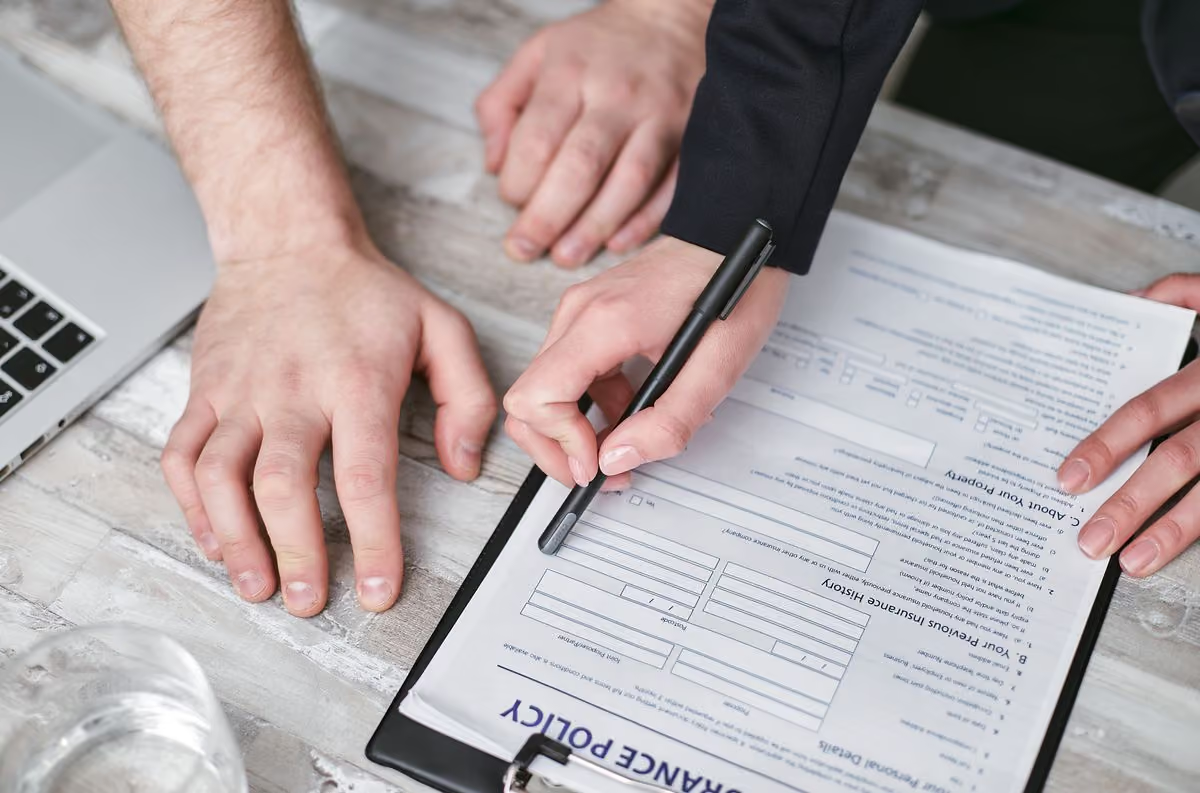
Most experienced operators lean on some mix of the following. None is sufficient alone, and the strongest setups layer several.
Strip away the products and a defensible setup comes down to three things working together. Judge whatever tools you use against these.
A host who hits all three is in a strong position: the hazard was managed, the guest was warned, and the paper trail backs it up. That is the difference between a claim that resolves quietly and one that becomes a drawn-out fight.
Nowistay does not sell you insurance or install your railings, and the physical safety work above is still yours to do. What it solves is the two parts hosts most often get wrong: getting the safety information in front of every guest consistently, and keeping a record that supports your account later. Your house rules and safety information (pool depth, stair cautions, the no-smoking rule, where the smoke and CO detectors are located, emergency contacts) live in the branded welcome guide that every guest receives. Because the guide is the same for every booking, the disclosure is consistent and on the record rather than something you mention on a good day and forget on a busy one. One caveat: the welcome guide puts your disclosures on the record, but it is not a signed waiver and does not capture a legal acknowledgement, so treat it as proof of what you told guests, not as a signature you can wave at a court.
The guide is also part of what the AI co-host draws on, so when a guest asks "is the pool deep enough for kids?" or "where is the fire extinguisher?" the answer comes back in seconds, in their language, from the safety information you set up. The warning reaches the guest at the moment they need it, not only on a sign they walked past.
If something does go wrong during a stay, the message trail works for you. When a guest reports an incident (a slippery step, a broken rail, a smell of gas), the AI co-host sorts it as a safety issue, flags it, and routes it to the right person, and serious safety matters are escalated to you rather than left to the AI to resolve. Every one of those messages is timestamped and kept, so you have a dated record of what was reported and when you responded. Pair that with your own maintenance records and you have the kind of documented account that supports you if a liability claim follows. If you run a cleaning or maintenance team, photo checklists give you dated proof that detectors, railings, and hazard points were checked on each turnover. You can set those up in the guide on how to create checklists for your teams, and if you want to confirm who is actually staying (useful when a claim hinges on who was on the property), you can turn on guest identity verification so the booking name is matched against a verified identity. Whether you do this through Nowistay, a full PMS, or a folder of your own notes, the criteria above are the test: hazards guarded, guests informed, and a record you can produce.
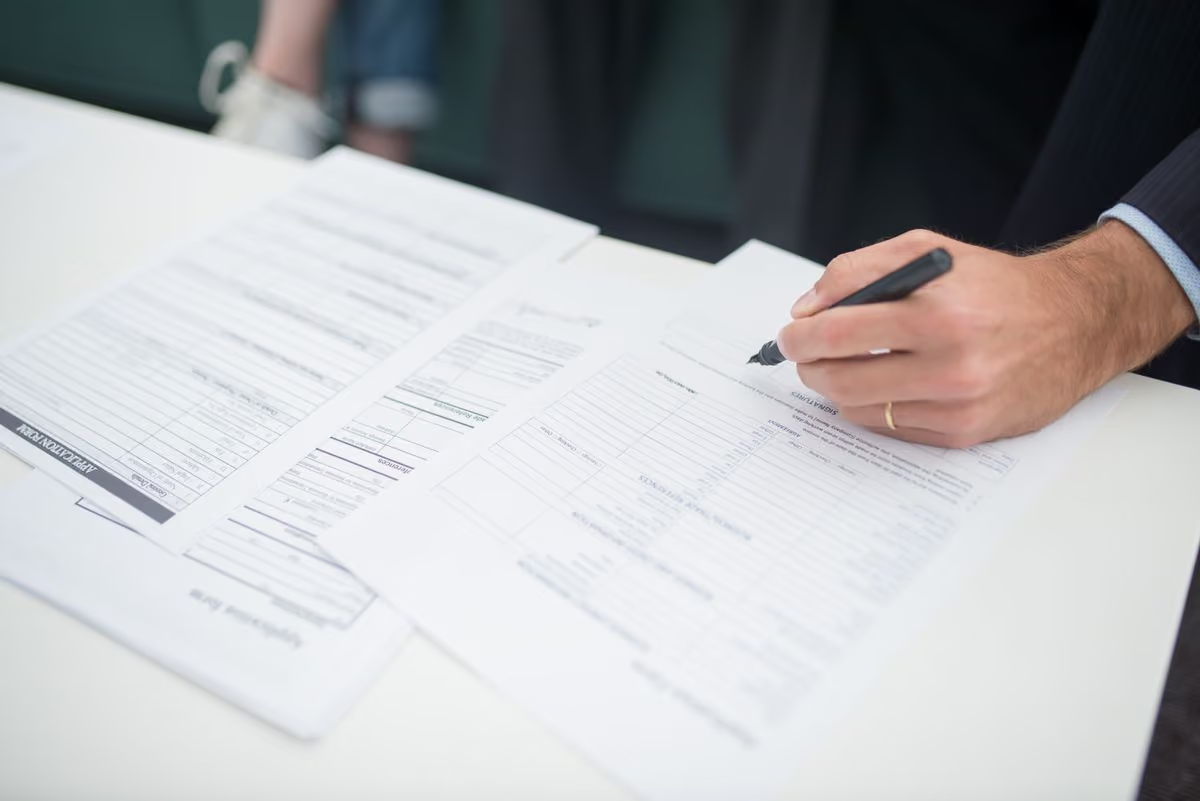
Standard homeowner policies often exclude commercial guest use, and platform protection programs carry caps and exclusions. Read your policy language and get written confirmation that paying-guest activity is covered, before an incident, not after.
A smoke or CO detector with a dead battery is arguably worse than no detector, because it creates the appearance of safety while doing nothing. Equipment not tested on a schedule is a hazard, not a protection.
A warning buried in a printed manual does little if the guest never reads it. Put critical warnings where the hazard is (a sign at the pool) and in the guide the guest actually receives, so you can show the information was delivered.
If your defense is "I am pretty sure the railing was fine," you have already lost ground. Without dated maintenance logs and a record of what guests were told, your account rests on memory, which carries little weight against an injured guest.
The most dangerous category is the known problem. Once a guest mentions a loose step or a flickering outlet, that hazard is no longer something you should have known about. You knew. Fix it promptly and record that you did, because a previously reported hazard left unaddressed is the hardest thing to defend.
Almost none of this is expensive or technical. A barrier, a non-slip strip, a fresh battery, a clear sign, and a habit of writing things down will prevent most of the accidents that turn into claims and defend you on the ones that still slip through. The hosts who get burned are rarely the unlucky ones. They are the ones who never asked the question a lawyer asks first. Spend a few hours this month removing the avoidable hazards, getting your safety information in front of every guest, and keeping a clean record, and you turn a frightening unknown into something you have already handled.
Sign up free. When a guest reports a safety issue, the AI co-host sorts it by urgency, flags it, and escalates serious matters to you, while every message stays timestamped and on file. Add photo checklists so your team's safety checks are dated proof, and connect Airbnb, Booking.com, VRBO, Expedia, and Agoda in one place.
Try Nowistay free

Over 25 years of experience in real estate investing and a recognized expert in short-term rental automation. Bassel helps property managers increase revenue, cut operating costs, and deliver 5-star guest experiences using AI-powered tools he built from firsthand hosting experience.