A large, loyal, and underserved group of travelers struggles to find listings with accurate accessibility information, so they book the few hosts who get it right and return year after year. This guide surveys the standard tools (OTA filters, professional audits, physical adaptations, detailed photos and measurements), defines what honest accessibility detail looks like, and shows how accurate descriptions plus fast pre-booking answers turn this market into repeat business.

Sign up free. Put your accurate accessibility detail in a branded welcome guide, sync it to your listings across Airbnb, Booking.com, VRBO, Expedia, and Agoda, and let the autonomous AI co-host answer door-width, step, parking, and bathroom questions in seconds, 24/7, in 15+ languages. $12 per property per month after the trial.
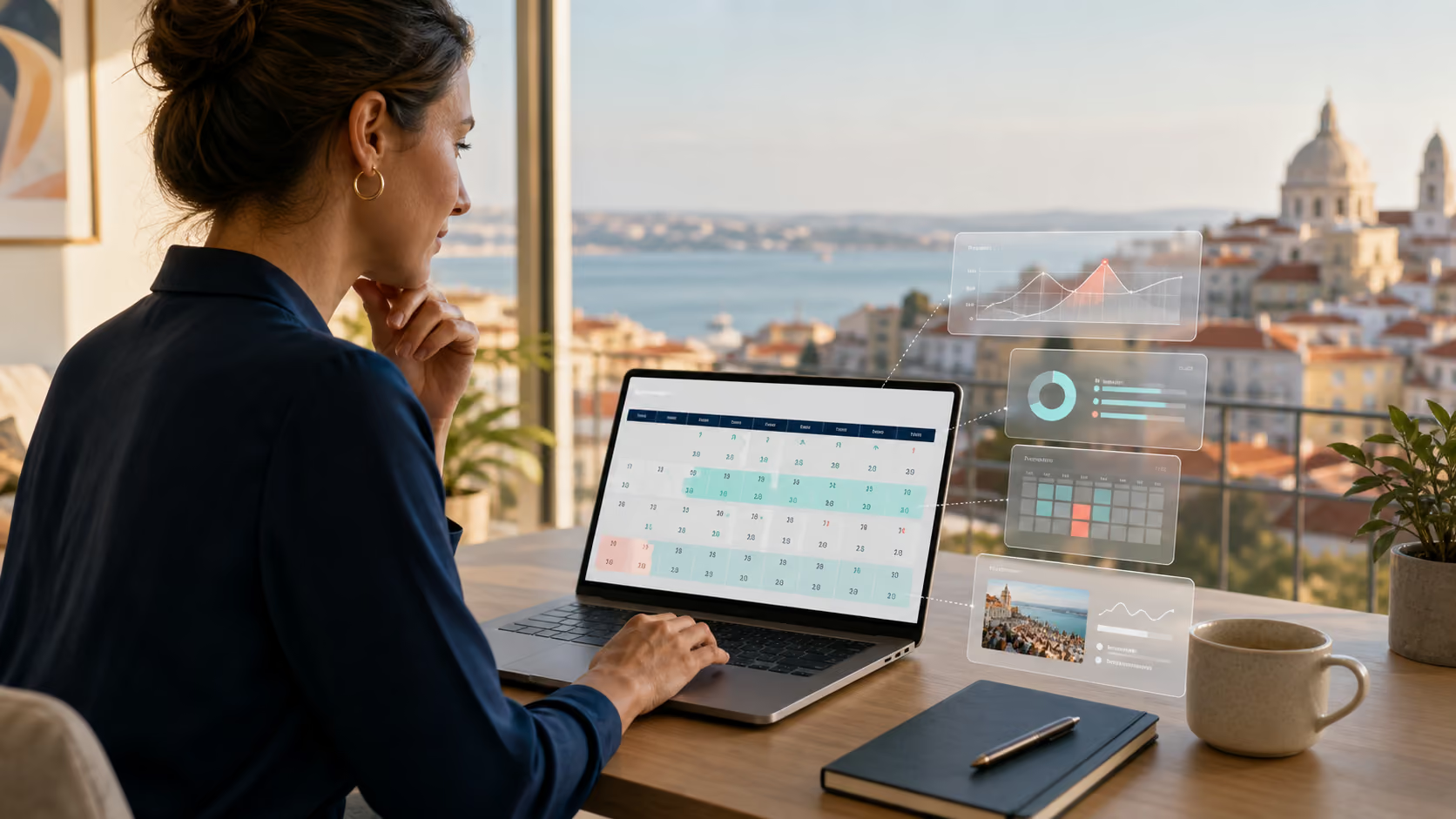
Start free trialA traveler who uses a wheelchair is planning a week away. She opens five tabs, filters for step-free access, and reads each listing twice. The photos look promising, but none tell her the one thing she needs to know: how wide is the bathroom door. So she sends five messages asking for the measurement. Two hosts never reply. Two say "I think it should be fine." One host answers in two minutes with an exact number and a photo of the doorway with a tape measure across it. Guess who gets the booking, the five-star review, and the rebooking next spring.
Travelers with accessibility needs are not a niche you can ignore. Estimates put the number of people worldwide living with some form of disability above one billion, and that figure climbs every year as populations age. These travelers, and the friends and family who travel with them, control a large and growing share of leisure spending. They are also among the most loyal guests you will ever host, because a place that genuinely works for them is rare and worth returning to. The problem is not demand. The problem is that accurate accessibility information is almost impossible to find, so a motivated, high-value guest spends her evening guessing.
When a guest cannot confirm a place will work for her, she does one of two things. She books anyway and risks arriving to a property she cannot use, which ends in a refund request, a one-star review, and a story she tells everyone she knows. Or she plays it safe and books the one listing that gave her certainty, even if it costs more. Either way, the host who supplied honest detail wins and the host who stayed vague loses, often without ever knowing the booking existed.
The financial picture is straightforward. Accessible travelers tend to book longer stays, travel in the shoulder season when school is out and crowds are thin, and return to places that worked. They often travel in groups, because a guest with a mobility need usually brings companions, which means a larger party and a higher nightly rate. A single accurate paragraph in your listing can be the difference between an empty calendar in October and a repeat guest who books your place every year. The cost of getting it wrong is not just one lost booking. It is a missed relationship with a guest who would have come back, and a public review warning the next ten travelers away.
The WHO estimates 1.3 billion people live with significant disability, and ADA.gov documents the accessibility standards US properties are measured against.
Most hosts who take accessibility seriously reach for some combination of the following. None is wrong, and the better setups use several together.
Strip away the tools and the goal is simple: a guest with a real need should be able to decide, before she books, whether your place will work for her, without having to ask. The listings that win this market share a few traits.
Nowistay does not audit or certify your property, and it will not tell you whether your bathroom is accessible. That part is on you: you supply the accurate detail. What Nowistay does is make sure the detail you supply reaches the guest in two places that matter, and that it is there the moment she needs it.
First, the accurate accessibility information lives in your branded welcome guide, which is built per property. Because the welcome guide is part of the knowledge the AI co-host draws on for that property, the same detail can flow into your listing descriptions and amenities through content sync, which pushes photos, amenities, and descriptions out to your connected channels across Airbnb, Booking.com, VRBO, Expedia, and Agoda. You write the door widths, the step count, the parking surface, and the bathroom layout once, and they appear where guests are looking instead of living only in your head or in a note you forget to update.
Second, the autonomous AI co-host answers the specific pre-booking questions that no listing field can fully cover. When a guest asks about a door width, the number of steps to the entrance, where the accessible parking is, or how the bathroom is laid out, the AI answers in seconds, around the clock, in more than fifteen languages, drawing on the detail you put in the welcome guide. A traveler in another time zone who messages at midnight with a real mobility question gets a precise answer before she books, not a "we will get back to you tomorrow" that sends her to the next listing. The AI is fully autonomous, so the answer goes out without you having to be awake or at your desk, and it works natively on Airbnb, Booking.com, WhatsApp, and email. You can set this up alongside WhatsApp guest messaging with the AI co-host and automated guest emails so the same accurate answers reach guests on whichever channel they use to reach out.
Whether you do this through Nowistay, a full PMS, or a stack of separate tools, the criteria above are the test: honest detail about what is and is not accessible, measurements a guest can self-qualify against, and fast, specific answers before she books.
"Wheelchair friendly" and "easy access" tell a guest nothing she can act on. She cannot fit her chair through an adjective. Replace every reassuring word with a measurement or a plain fact, and let the guest decide.
Ticking the "accessible" box when the route has two steps gets you the booking and then the refund, the one-star review, and the warning to every future guest. An honest "not step-free, two steps at the entrance" loses one mismatched guest and keeps your reputation intact.
Listing only the good features and saying nothing about the steps or the narrow hallway reads as evasive to an experienced accessible traveler. Stating the limits plainly builds the trust that converts.
A guest with a specific accessibility question is a guest ready to book. A reply that takes two days, or never comes, hands that booking to whoever answers first. This is the single most common way hosts lose this market without realizing it.
When your Airbnb listing says one thing and your Booking.com listing says another, the guest trusts neither. Keep the accessibility detail identical everywhere by maintaining it in one place and syncing it out.
You do not need a renovation to start winning this market. You need accurate information, well placed and fast to reach. Here is a short plan you can run in a week.
Accessibility is one of the few areas in hosting where doing the honest, careful thing is also the commercially smart thing. The travelers who need this detail are loyal, they spend well, they fill your shoulder season, and they tell each other where to find hosts who get it right. The barrier to entry is low: a tape measure, an honest paragraph, and a way to answer specific questions fast. Most hosts will not bother, which is exactly why the ones who do will own this market for years. The guest reading five tabs tonight is looking for one host who gives her certainty. Be that host.
Sign up free. Maintain your accessibility information once, keep it consistent across all five channels, and give every guest a precise pre-booking answer so the right travelers book with confidence and come back. Onboard a property in minutes, whether you manage one place or a hundred.
Try Nowistay free

Over 25 years of experience in real estate investing and a recognized expert in short-term rental automation. Bassel helps property managers increase revenue, cut operating costs, and deliver 5-star guest experiences using AI-powered tools he built from firsthand hosting experience.