Manual code management takes 5-10 minutes per booking, at 50 bookings/month, 4-8 hours of pure overhead, plus the security risk of forgotten codes left active. A 2023 guest-communication study: 67% of guests want self-check-in. This guide walks through the standard manual workflow, the common solutions (Nuki, igloohome, TTLock, Yale, August, Schlage, plus native PMS integrations and specialist access-management middleware), and what full automation requires.
Sign up free. Nowistay integrates with Nuki, igloohome, TTLock, Tedee and HomeIt, codes auto-generate at booking, deliver via welcome guide and AI co-host, and revoke at checkout. Zero host action.
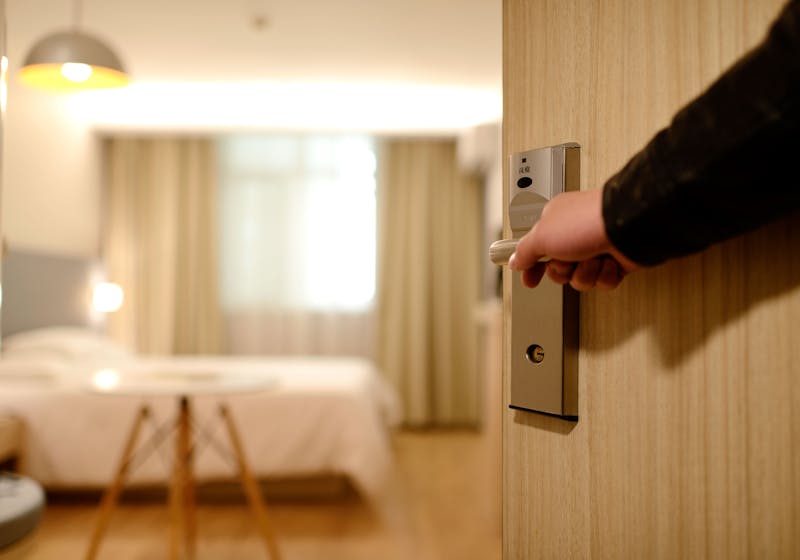
Start free trialA guest checks in at 11:47 PM after a delayed flight, types the code on the keypad, the door clicks open. They never message the host, never wait for a key handoff, never wonder if the host is still awake. That entire experience is the result of three things: a code generated specifically for their booking, delivered automatically before arrival, and revoked automatically at checkout. Get those three steps right and self-check-in works at scale. Miss any of them and the host is on call for every late arrival.
Self-check-in is also where security risk and operational risk converge. A code that doesn't expire is a future security incident. A code that fails to deliver is a 1:00 AM phone call. A code that activates too early is a guest entering before the cleaner has finished. Five lock brands cover most of the market (Nuki, igloohome, TTLock, Tedee, HomeIt), each with their own API quirks, and the difference between manual code management and automated code lifecycle is the difference between a security liability and a self-running access system. This guide walks through what reliable automation looks like and how to implement it across a portfolio.
Three reasons that show up consistently:
Smart-lock and self-check-in adoption is now mainstream. A 2024 industry report found that 68% of hosts use smart locks and 74% always or frequently offer self-check-in. A 2023 global property-manager survey reported that keyless entry adoption rose to 64%: the largest year-over-year tech adoption increase in the survey. Industry research adds that 48.2% of hospitality professionals say guests welcome contactless check-in and 35.3% say guests now expect it as standard. A 2023 guest-communication study (2,024 vacation rental guests surveyed) puts the demand side at 67% of guests wanting self-check-in. A smart lock with an auto-delivered code is the simplest way to deliver that experience without coordinating physical key handoffs.
A code that doesn't get revoked at checkout is a security incident waiting to happen. Across 10 properties at 50 bookings a month, that is 500 codes generated annually. Forgetting to revoke even 5% means 25 codes still active at the end of the year. With one of them, a former guest can come back, a contractor can walk in, or a stolen device with the code in a text message can be used.
Per booking: open the lock app, generate a code, copy it, paste it into a message to the guest, wait until checkout, log back into the app, revoke the code. Anecdotally 5-10 minutes per booking when done correctly. At 50 bookings a month, that is 4-8 hours of pure code management.
Three failure modes recur in host forums:
The host has multiple bookings in the same week and accidentally sends Guest A's code to Guest B. Guest B arrives, the code doesn't work, and the host has to scramble to resolve it under time pressure.
The host forgets to remove the code after the guest leaves. The next guest gets a different code, but the prior guest's code is still active. If the lock supports time-bounded codes (as most modern locks do), the issue is muted; if not, the prior guest can still enter.
The guest arrives at 10 PM, hasn't received the code, and texts the host. The host is asleep. The guest waits at the door. The review reflects it.
Every step is manual, and the host is the only person responsible for getting it right. At one property this is fine; at five it becomes a recurring source of mistakes.
Nuki Web, igloohome dashboard, TTLock, August/Yale Home, Schlage, every smart lock comes with its own app. They support generating temporary codes, but they don't know about your bookings. You manually generate the code and set the window for each booking.
Most full PMS integrate with at least 2-3 lock brands. Some support only a couple of mainstream brands; others cover a wider range; some rely on a specialist access-management platform as middleware. The integration depth varies, some only generate codes, others handle delivery, revocation, and code per booking. Always check which specific lock models are supported, not just the brand.
Specialist tools that focus exclusively on access management. These platforms support a wide range of locks and integrate with major PMS as middleware. Strong choice if your PMS doesn't natively support your lock brand. Cost: typically USD 5-15 per door per month on top of your PMS.
Welcome guide tools can display the access code dynamically once the host pastes it in. Useful for delivery but not for generation or revocation, the host still does that elsewhere.
Some hosts keep a key box at the property with a code that doesn't change. Cheap and reliable, but the code is shared across all guests over time, so it's a security weakness, anyone who has stayed has the code permanently.
A workaround for portfolio hosts: give the lock app credentials to your co-host so they handle code generation. Works at small scale; creates security and accountability concerns at larger scale.
To remove the host from per-booking code management, an automation has to do five things:
Nowistay integrates natively with five smart-lock providers: Nuki, igloohome, TTLock, Tedee, and HomeIt. When a booking lands, the system generates a unique 4-6 digit code (random by default, or configurable as the last digits of the guest's phone). The activation window is set automatically from check-in to check-out, including handling of negotiated early check-in or late check-out updates. The code is delivered through three paths: the welcome guide URL the guest receives in pre-arrival messages, an automated message at the configured time before arrival, and on-demand replies from the AI co-host when the guest asks "what's the code?". At checkout the code is revoked automatically. Every event is logged for audit. Cleaner codes are managed separately with a 4-hour active window per cleaning mission, so the cleaner has access exactly when needed and not before or after. Whether you reach this level of automation through Nowistay, an access-management middleware layer plus your existing PMS, or by stitching together your lock app with a PMS that supports your specific lock model, the criteria above are the test for any setup.
To configure your lock in Nowistay, choose the instructions for your device: How to Connect a Nuki Smart Lock ; How to Connect a TTLock Smart Lock.
Three considerations matter more than the brand:
If you have a compatible lock and a PMS that supports it:
A guest's flight is delayed and they message at 11 PM asking to check in at 1 AM. Your code's activation window was set to end at midnight. Two options: extend the window automatically when the negotiated check-in time changes, or fall back to manual code regeneration. PMS-native integrations typically handle the first; standalone lock apps require the second.
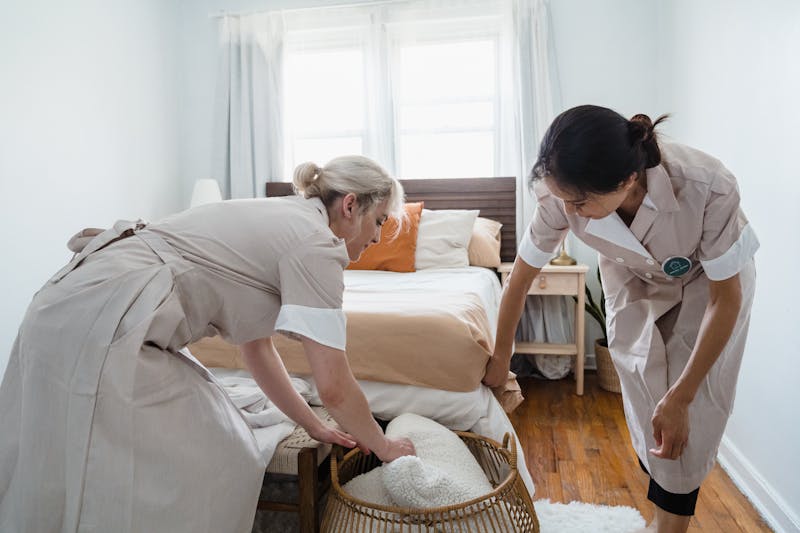
The cleaning team needs lock access for the turnover window, separately from the guest. Best practice is a dedicated cleaner code with a 4-hour active window per cleaning mission, generated and revoked automatically. Avoid sharing a master code with the cleaning team, once given, it's permanent.
Keep one or two long-lived codes for trusted maintenance staff, but rotate them every 90 days. The audit log shows whether they're being used in expected hours; rotation closes the risk if a code leaks.
Battery-powered locks occasionally lose Bluetooth or Wi-Fi connectivity. Always have a physical key backup at the property (in a separate lockbox with a master code that you rotate quarterly). Smart locks fail rarely, but when they do the cost is high.
If you're still using physical keys, the transition is straightforward but worth planning:
Total transition timeline for a 10-property portfolio: typically 6-8 weeks. The investment per door is USD 150-300 for the lock plus installation, plus ongoing PMS or platform fees.
Sign up free. Every code event is logged with a timestamp; cleaner codes have a separate 4-hour active window. EUR 12/month per property after the trial.
Try Nowistay free

Over 25 years of experience in real estate investing and a recognized expert in short-term rental automation. Bassel helps property managers increase revenue, cut operating costs, and deliver 5-star guest experiences using AI-powered tools he built from firsthand hosting experience.